Activities · Ubud
The purification bath at Tirta Empul
The one temple where visitors are invited into the ritual rather than kept behind it: how the melukat purification actually works, what to wear, and which spouts are not for you.
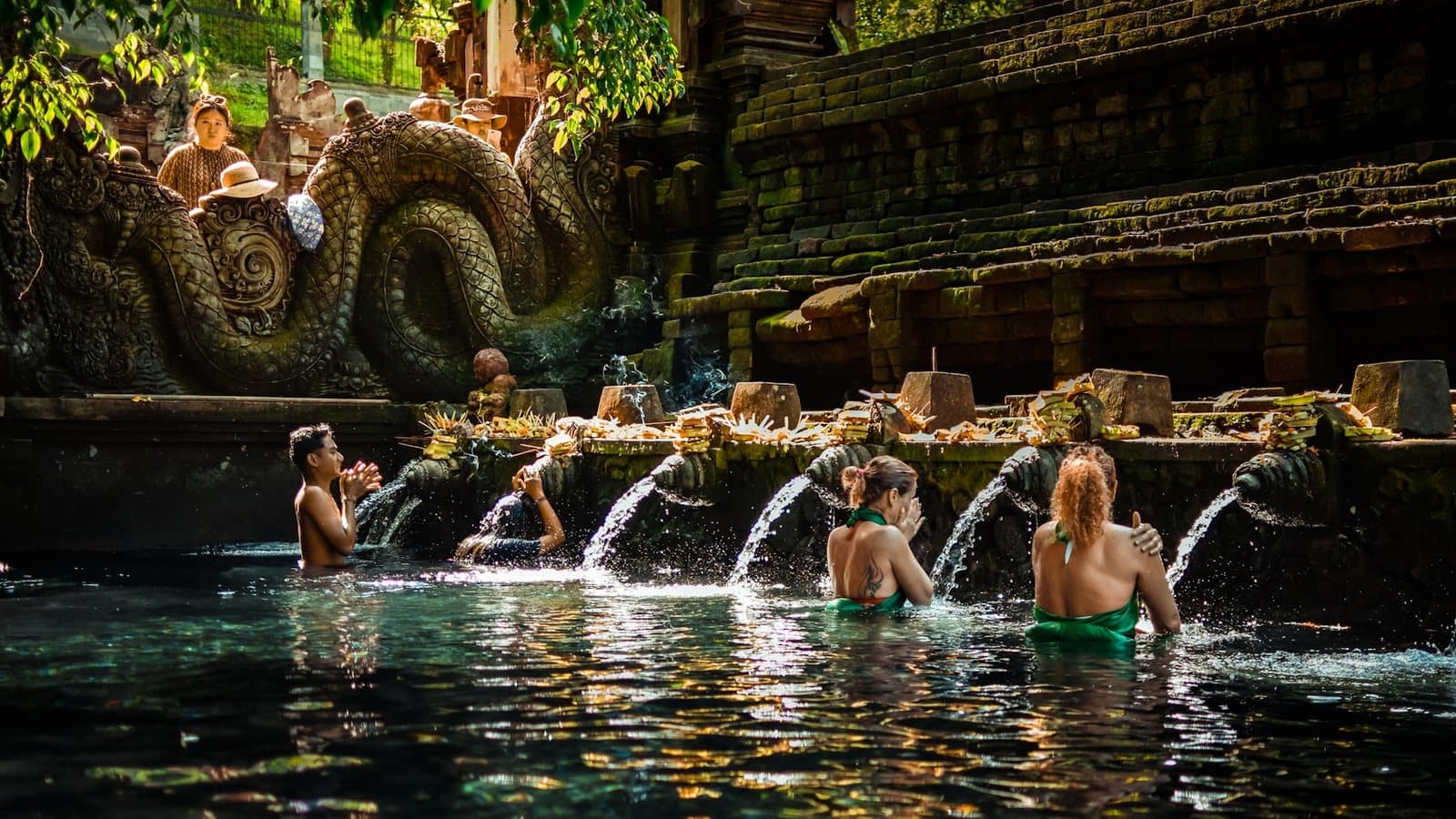
Tirta Empul, north of Ubud near Tampaksiring, is built over a spring the Balinese have treated as holy for a thousand years, and it is the rare temple where a visitor's place is in the water rather than behind a wall. The melukat purification is a living ritual that tourists are permitted to join, which is exactly why it deserves doing properly or not at all.
How the bathing works
The spring feeds long stone pools lined with carved spouts, and the ritual moves left to right: you queue in the water, bow under a spout, wash your face and head, pray, and move to the next. Two things matter more than the order. First, certain spouts are reserved for funerary rites and are not part of the visitor sequence; watch what locals skip, or ask, before you start. Second, this is prayer, not a pool. Move at the pace of the queue, keep your voice down, and leave the waterproof camera in the bag while you are under the water.
What to wear
You bathe in a sarong, tied with a sash, and both can be borrowed or hired at the entrance; a change of clothes and a towel are on you, and lockers exist for the rest. Temple custom asks menstruating women not to enter, and the rule applies here as at every Balinese temple.
When to go
The temple sits on the Ubud tour circuit, and by late morning the queue for the spouts can be an hour deep in high season. Go early. Ceremonies take precedence over visitors at any hour, and watching one from the edge of the courtyard is not a wasted trip; it is the better version of it.
Nearby
The spring pairs naturally with the Tegallalang terraces on the same road back to Ubud, and the month by month odds of doing both dry live in the seasonal guide.