Activities · The highlands and the volcanoes
Climbing Mount Agung
Bali's highest and holiest mountain, climbed at night on loose volcanic ground. The two routes, why a guide is not optional, and the status check that comes before either.
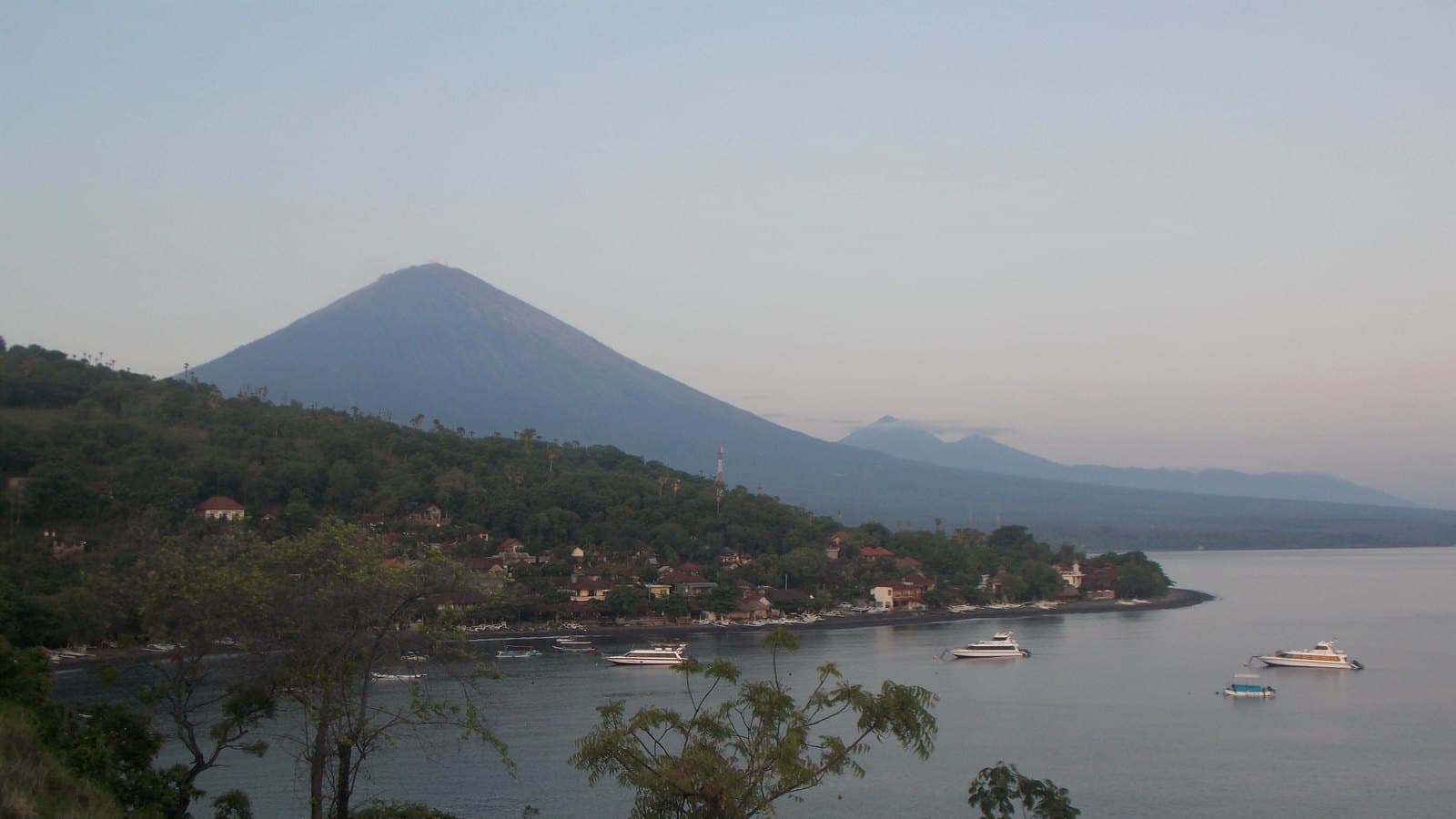
Everything true of the Batur sunrise trek is also true of Mount Agung: a night start, a headlamp, a slog on loose volcanic ground, a summit view worth the alarm. Read that as an invitation and you have already misjudged the mountain. Agung is Bali's highest peak, its most sacred one, and an active volcano besides. The difference between it and Batur is not a matter of degree. It is a difference in kind.
The island's highest point, and its centre
Agung is the tallest mountain on Bali and, in Balinese cosmology, the most important one. The direction toward it, kaja, orders temples, house compounds and daily life across most of the island. Its lower flank carries Pura Besakih, the mother temple, the highest sanctuary in Balinese Hinduism. Height and holiness sit on the same summit here in a way Batur, a smaller cone further along the range, does not share.
Two routes, not one
Two trailheads lead up the mountain, and they are not interchangeable. The shorter route, near Pura Pasar Agung on the south side, is the one most operators run: still a serious climb, but the more approachable of the two. The longer route, near Pura Besakih on the southwest flank, follows the ridge most of the way to the true summit and asks for far more distance, exposed ground and darkness before any light shows over the crater. First-timers are steered toward the shorter route for good reason; the longer one suits climbers who have done comparable mountains before.
What the climb actually involves
Both routes start in the small hours, because the summit and the sunrise are the point, and a tropical afternoon is no place to be on bare volcanic rock. The walking is many hours up, on ground that gives way underfoot for long stretches: loose ash, scree and broken lava rather than a graded path. The final section on either route turns to scrambling with hands as well as feet. At the top, after a climb that leaves most layers soaked through, the wind and the pre-dawn cold are real by island standards, and altitude adds its own fatigue to legs already spent. This is not Batur with extra steps, but a harder mountain sharing only the shape of the morning.
Why guiding is not optional here
Local guiding associations control the trailheads, and climbing without one is impractical and unwise: no marked trail, no rescue infrastructure, technical ground in the dark on an active volcano. A guide reads the route by memory, paces the group against the sunrise, and judges when to turn everyone around. Settling the guide and the pickup the evening before, the way Batur climbers settle their own arrangements, matters here even more.
The mountain that can say no
Agung is watched continuously by Indonesia's geological agency, which assigns the volcano an alert level and adjusts it as the seismographs demand. When the level rises, climbing is suspended, and no argument changes that. The only correct approach is checking the current status close to the date of the climb and accepting a refusal as the mountain's answer, not the guide's. Agung also closes during major ceremonies at Besakih, when the mountain belongs to the temple calendar, on dates the temple sets and local guides know before any website does.
If the sunrise is what you actually want
Most travellers picturing a Bali volcano sunrise, cloud sea below, cold air, a line of headlamps climbing, are picturing Batur, and the Batur sunrise trek is the honest match: shorter, better organised, open on far more mornings of the year. Agung is for climbers who want the island's highest mountain for its own sake, ceremony and volcanic status included, not a harder route to the same photograph.
Where to base for it
Sidemen, on Agung's southern flank, and Kintamani, the caldera rim to the northwest, both put a trailhead within a short drive rather than a long one from the south, turning a midnight alarm into a plan rather than an ordeal. The seasonal guide weighs which months give the best odds of a clear morning, since a mountain this tall makes much of its own weather regardless of the calendar.
Near the top, before the last scramble, the headlamp line behind you disappears into black rock, and far below, already lit by the first grey light, Batur's small cone sits inside its own caldera, the mountain most people came for instead.