Activities · The highlands and the volcanoes
The Mount Batur sunrise trek
Two hours of climbing in the dark for the most booked dawn on the island: what the trek actually involves, and the one thing to settle before your alarm rings at three.

The Batur sunrise trek is the island's most booked early alarm, and it mostly deserves the reputation: a short, steep volcano climbed by headlamp, sunrise above a sea of cloud with Agung and Rinjani floating on it, and the caldera lake below turning silver as the light lands. It is also an industry, with everything that implies, and the difference between a great morning and a grim one is almost entirely decided the evening before.
What you are climbing
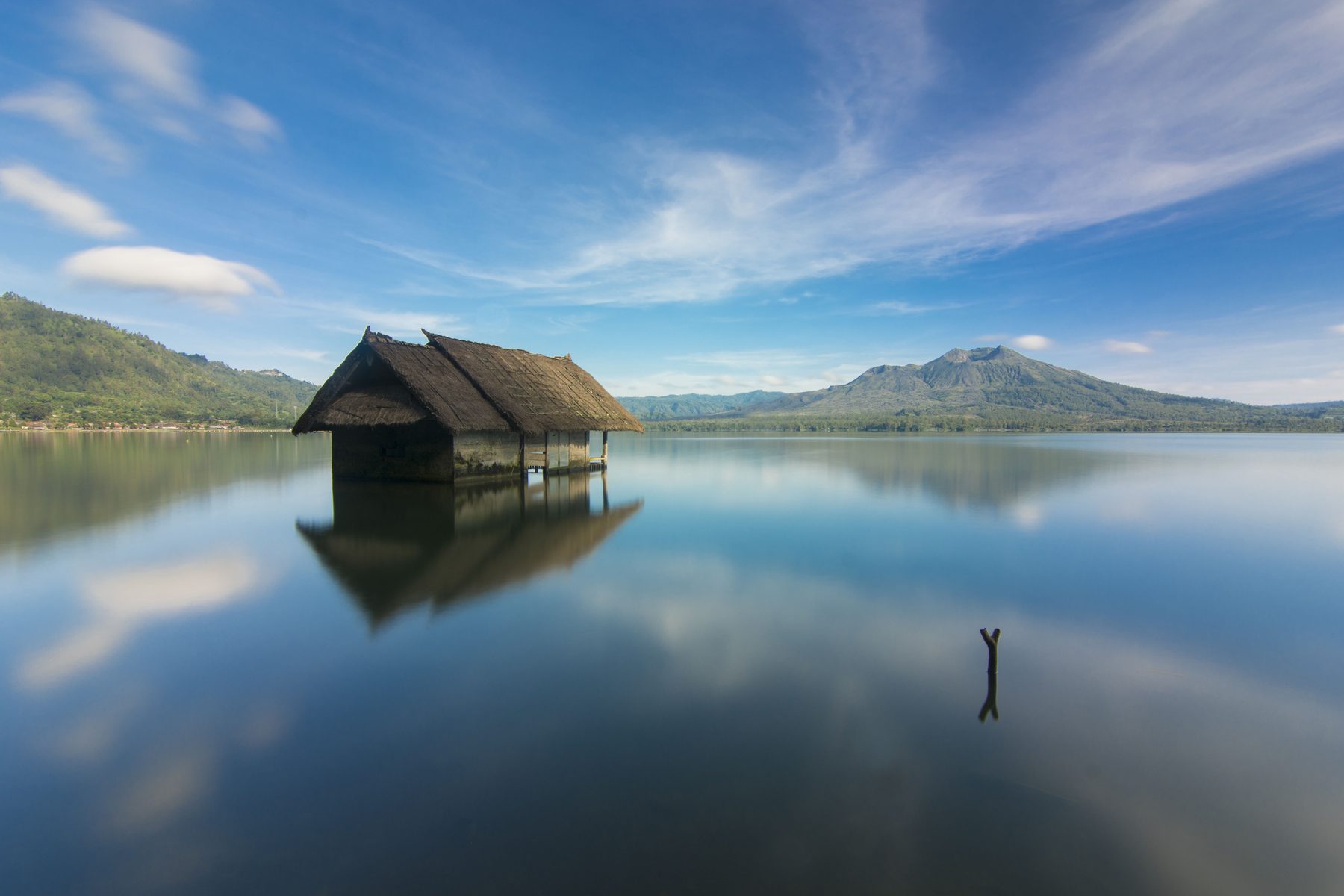
Batur is an active volcano standing inside the caldera of a far older one, which is why the drive in feels like entering a bowl: the rim you cross at Kintamani is the wall of the ancient crater, and the cone you climb grew inside it. The black lava fields along the road are the trace of the eruptions that rebuilt this landscape across the last century. The summit stands at about 1,700 metres, modest on paper, and the climb starts from the caldera floor, so the ascent itself is around 700 vertical metres. The volcano is monitored, and on the rare occasions the alert level rises, guiding stops; that is a fact of climbing an active mountain, not a reason to skip it.
What the morning involves
Pickups from Ubud and the south run in the small hours, because the walk starts around four from trailheads inside the caldera. The climb takes roughly two hours of steady walking: a gentle start on farm tracks, then a real grade on volcanic sand and loose rock where every step slides half a step back. It is short rather than easy. At the top you wait for the light in genuine cold, by Bali standards: single layers soaked in sweat turn icy in the summit wind, and the people shivering in shorts next to you did not read this paragraph. A warm layer and a windbreaker transform the hour. Sturdy trainers beat sandals by a distance, and a headlamp beats a phone torch, if only for keeping both hands free on the sandy sections.
The descent in daylight is the underrated half: you finally see the caldera you climbed through, steam vents on the flank, the lake, and the full absurd beauty of where you have been walking.
The guiding question
Guiding on Batur is an organised local market, and trailhead arrangements are effectively mandatory in practice. Fighting that at four in the morning, by torchlight, in the cold, is a lost argument that ruins the day. The working method is to settle everything the evening before, through your accommodation or a booked operator: the price, the pickup time, what it includes, whether breakfast at the summit is part of it. We publish no fee figures until we can date them from a source, and any operator who cannot state a clear total before the morning is telling you something useful.
When to go
The dry months from May to September give the best odds of the view, and the view is the entire point: this is a weather bet, not a hike for its own sake. In the wet season the summit can deliver a sunrise above the clouds or the inside of one, at the same price and the same alarm. The month by month odds live in the seasonal guide, and September in particular tends to combine clear dawns with thinner crowds than the July and August peak, when the summit path can feel like a queue.
If you do not want to climb
The sunrise economy has grown a second branch: jeeps that drive to viewpoints on the flank for the same dawn without the ascent, and the rim viewpoints of Kintamani serve the view at breakfast hour with no alarm at all. Neither is the summit, and neither pretends to be; both are honest answers for travellers with knees, children or a healthy relationship with sleep.
After the summit
The hot springs at Toya Bungkah, on the lake below the cone, are the traditional reward and earn their place in the plan. The caldera also sits naturally on the road east: Sidemen and Amed continue the journey rather than doubling back, and the travel time matrix prices those legs honestly. Climbers heading back south pass the Tegallalang terraces at exactly the hour the light is good and the tour buses have not yet arrived, which is the closest thing the alarm clock offers to a refund.