Activities · The Nusa islands
Snorkelling with mantas off Nusa Penida
Reef mantas gather at cleaning stations off Penida's southwest cliffs the year round. The encounter is real and so is the swell: what the boats do not always say before the crossing.

Manta Point, under the cliffs of southwest Nusa Penida, hosts reef mantas the year round, and that regularity is the whole reason this trip became one of the island's signature days out. The site is a cleaning station: mantas come to hover while small reef fish pick their skin clean, the way big animals visit a car wash. Because the appointment is the animal's own, encounters are the norm rather than the jackpot, and a morning without a single manta is the exception operators genuinely apologise for.
The animal you are meeting
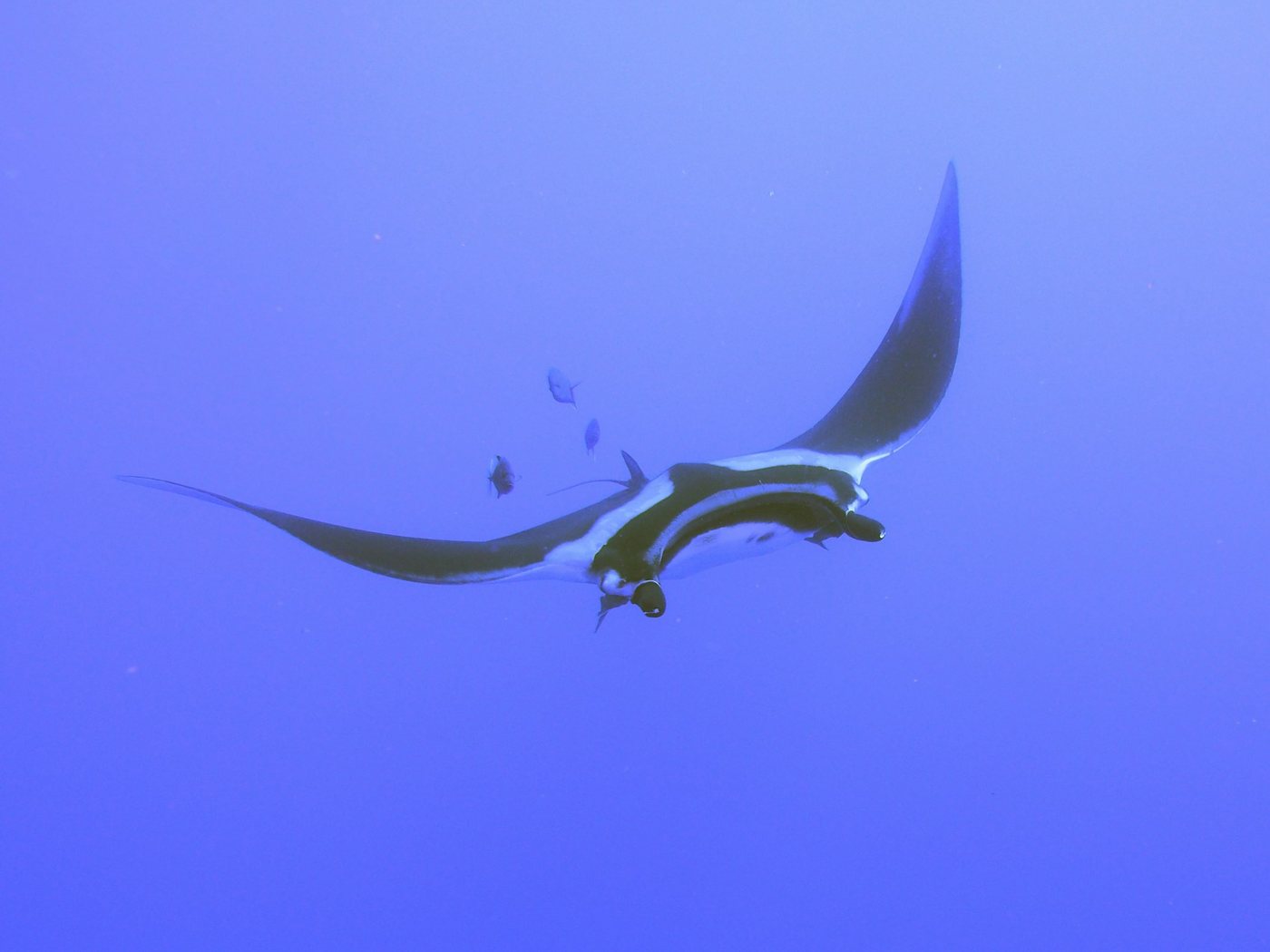
Reef mantas are among the largest fish a snorkeller will ever share water with, wingspans measured in metres, and they are harmless in the most literal sense: no sting, no teeth worth the name, a diet of plankton. Indonesia banned the fishing of mantas across its waters in 2014, and the seas around Penida sit inside the Nusa Penida marine protected area, which is why the population here is settled enough to keep appointments. None of that makes the encounter tame. A wild animal the size of a dining table, banking a metre under your fins, resets your scale of what the sea contains.
The crossing, and the honest planning fact
The site sits against exposed cliffs that take the southern swell head on. On a calm day the water is clear and the encounter serene; on a rolling day the boat ride is the activity, and operators go anyway more often than queasy passengers expect. Anyone prone to seasickness should treat the sea state as the main planning fact: take the tablet before the boat, not on it, book the earliest departure, and accept that some days the right call is the one the boats rarely make themselves. Trips run from Penida's own harbours, which keeps the crossing short, and as long day trips from the Bali side via Sanur and Padangbai, usually bolted onto the Penida day trip circuit.
Choosing a boat
The difference between operators is not the manta, it is the conduct. The flags worth checking before paying: a group small enough to fit around one guide in the water, a real briefing that covers distance and behaviour rather than just fin sizes, a crew that waits its turn when several boats share the site instead of dropping swimmers on top of the animal, and flotation offered without embarrassment to weak swimmers. The first boats of the morning get the site at its calmest and least crowded; by late morning in high season, Manta Point can host a flotilla, and the experience tracks the crowd more than the animal. We publish no trip prices or marine park fees until we can date them from a source.
Manners in the water
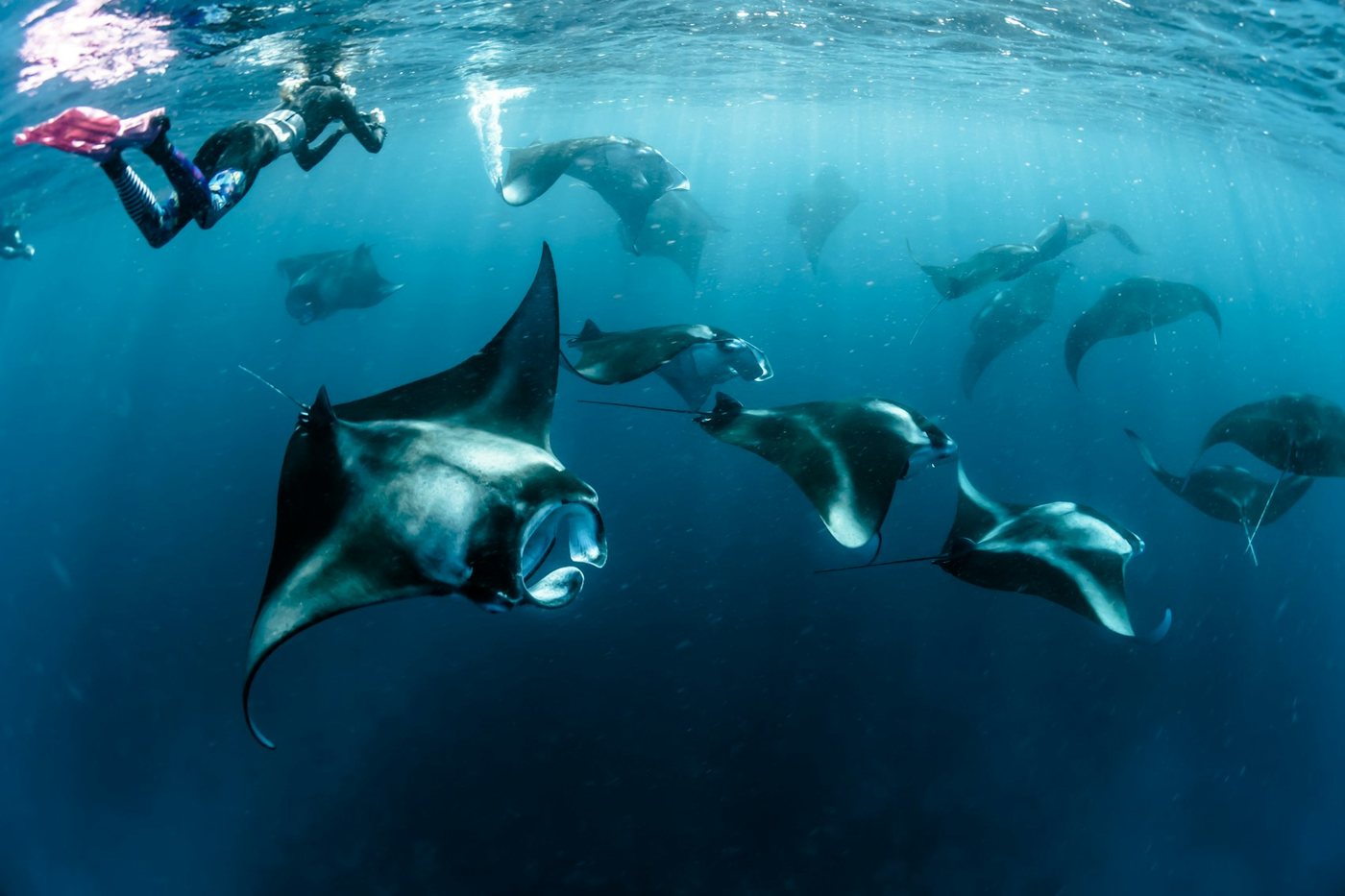
The rules that protect the site are simple and enforced by decency more than by patrols: keep metres of distance, never touch or chase, no flash, and let the animal set the geometry. Mantas at a cleaning station will pass close to a swimmer who stays calm and still; they leave when chased, and a manta that abandons the station because of one excited group is the day ruined for every boat behind. Float flat, keep your fins quiet, and the encounter comes to you. It is also the only version of the encounter worth having on camera.
Snorkel or dive
Snorkellers see mantas here, genuinely: the animals clean and feed near the surface, and this remains one of the few world class big animal encounters that requires no certification at all. Divers get the longer, calmer version of the same site, plus the channel sites beyond, and in the season divers chase the famous oceanic sunfish that snorkellers will not see. The dive shops of Padangbai and Amed work these waters year round.
When to go
There is no manta season to time: the cleaning station works the year round. What varies is the sea, and with it your comfort and the visibility. The dry months give the gentlest crossings on average, the wet season brings rain rivers of plankton that mantas feed on and rougher rides for humans; the seasonal guide prices that trade month by month. Whatever the month, mornings beat afternoons on both wind and crowds, which makes the short crossing from a night spent on Penida itself the connoisseur's version of the trip.