Activities · Ubud and around
The Ubud palace and the art market
Puri Saren Agung and the Ubud art market sit ten minutes apart, both free or nearly free, both widely dismissed as tourist traps. Half right: the morning produce market and the palace's evening dance performances are the genuine article underneath.
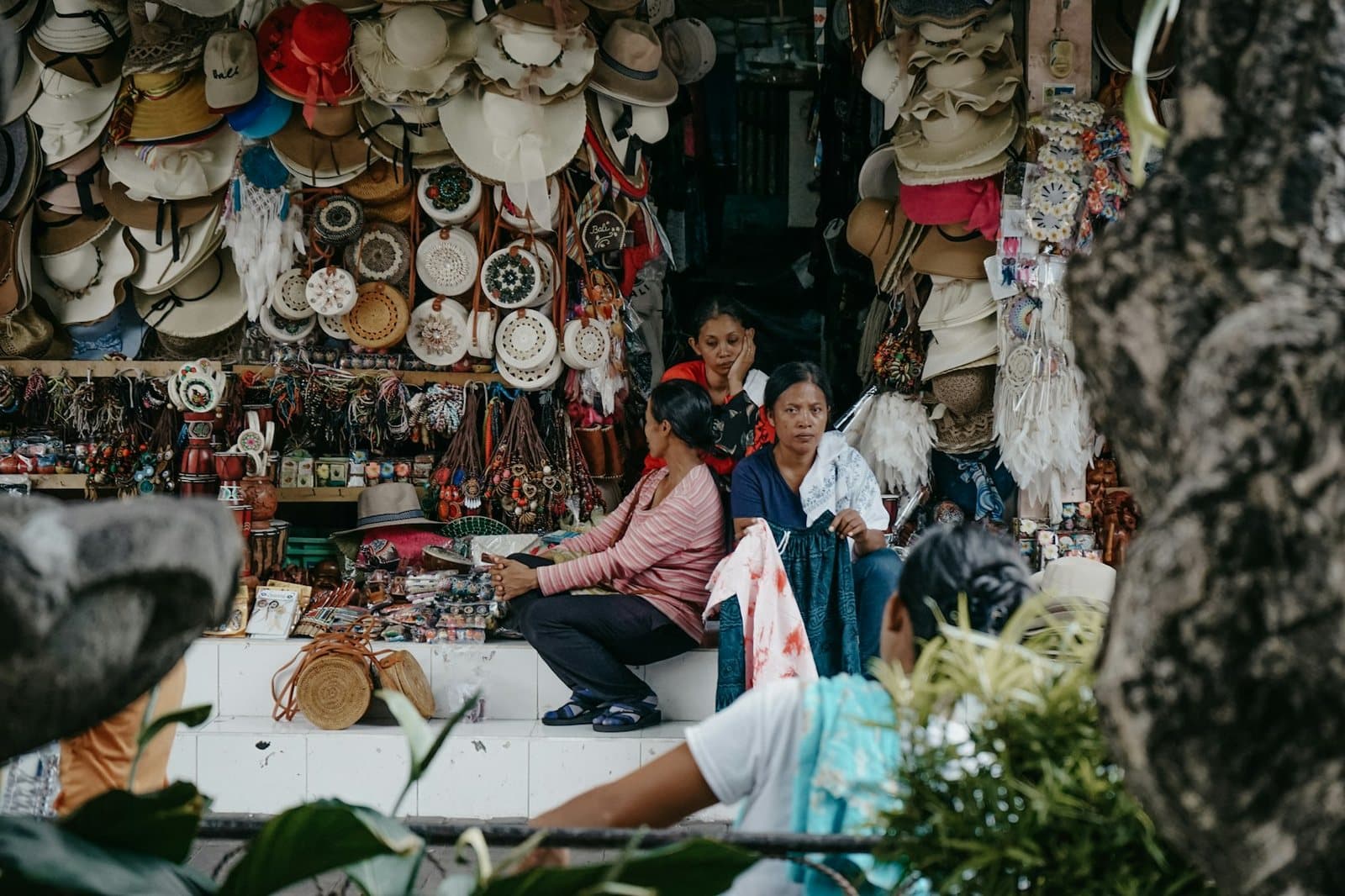
Puri Saren Agung and the Ubud market sit across the same junction from each other, both free or close to it, and both routinely written off as tourist traps by travellers who spent twenty minutes at each and moved on. They are half right. Under the layer that earns the dismissal, both places still hold something real, and knowing where to look is the entire difference.
The palace that still works
Puri Saren Agung is not a museum built to resemble a palace; it is the actual residence of Ubud's royal family, with courtyards open to visitors during the day and private quarters that stay exactly that. Walking in costs nothing at the gate and takes ten or fifteen minutes: carved stone gateways, a garden courtyard, pavilions built in the classical Balinese style, still lived in rather than roped off. The architecture rewards a slow look rather than a fast one, which most visitors do not give it on the way to somewhere else.
The market underneath the market
The building across the junction operates as two different markets depending on the hour. Before the tourist stalls open, it is a working produce market, Balinese traders selling vegetables, spices, flowers and offering materials to other Balinese, the transaction and the banter both running in the local language with no interest in a passing camera. Once the morning trade clears out, the same space fills with the market most visitors actually see: rows of sarongs, wood carving, bags and printed shirts pitched squarely at tourists, which is the layer that earns the market its reputation.
The morning rule
The rule that unlocks the produce market is simple and almost nobody follows it: go before the tourist stalls open. Arriving with the produce traders means walking through a genuinely local scene rather than a souvenir aisle, and the same walk an hour or two later shows an entirely different market in the same building. One trip covers both if the timing is right; most visitors only ever see the second one.
The dance that is not staged for a bus
The palace's real draw comes after dark. Dance troupes perform in the forecourt most evenings, legong and other classical forms in full costume and gamelan accompaniment, in the same courtyard where a royal family once staged these performances for its own household long before tourism existed. It is the one part of an Ubud market and palace day that is not a compromise version of something else; it is the genuine tradition, staged in the genuine building, open to whoever buys a seat.
Bargaining, without the cliché
Bargaining at the tourist stalls is not a contest to be won, and treating it as one misses the point. A vendor's first number is an opening offer, not an insult; counter with something you would actually be glad to pay, meet somewhere in the middle, and stop the moment both sides are satisfied rather than pushing for the last possible discount. Walking away is always an option and rarely personal. None of this requires theatre, and the vendors who work the market daily can tell within a sentence whether a buyer is enjoying the exchange or performing reluctance.
The hour either side
Ubud's centre rewards bracketing the palace and market with something quieter. The Campuhan Ridge walk starts a few minutes away and suits the cooler hour either side of midday heat, and the Monkey Forest sits an easy walk south for travellers who want temple carving without a crowd of stalls around it. All three sit inside Ubud proper, close enough to string together without a car.
The gamelan starts as the light drops, and the same courtyard that sold vegetables at dawn fills with an audience for a dance that has been performed there for longer than anyone selling sarongs across the road has been open for business.