Activities · Ubud and around
Yoga in Ubud
One of the world's genuine yoga capitals, and also the town where every hotel deck calls itself a wellness retreat. How to tell an established school from an add-on before you book.
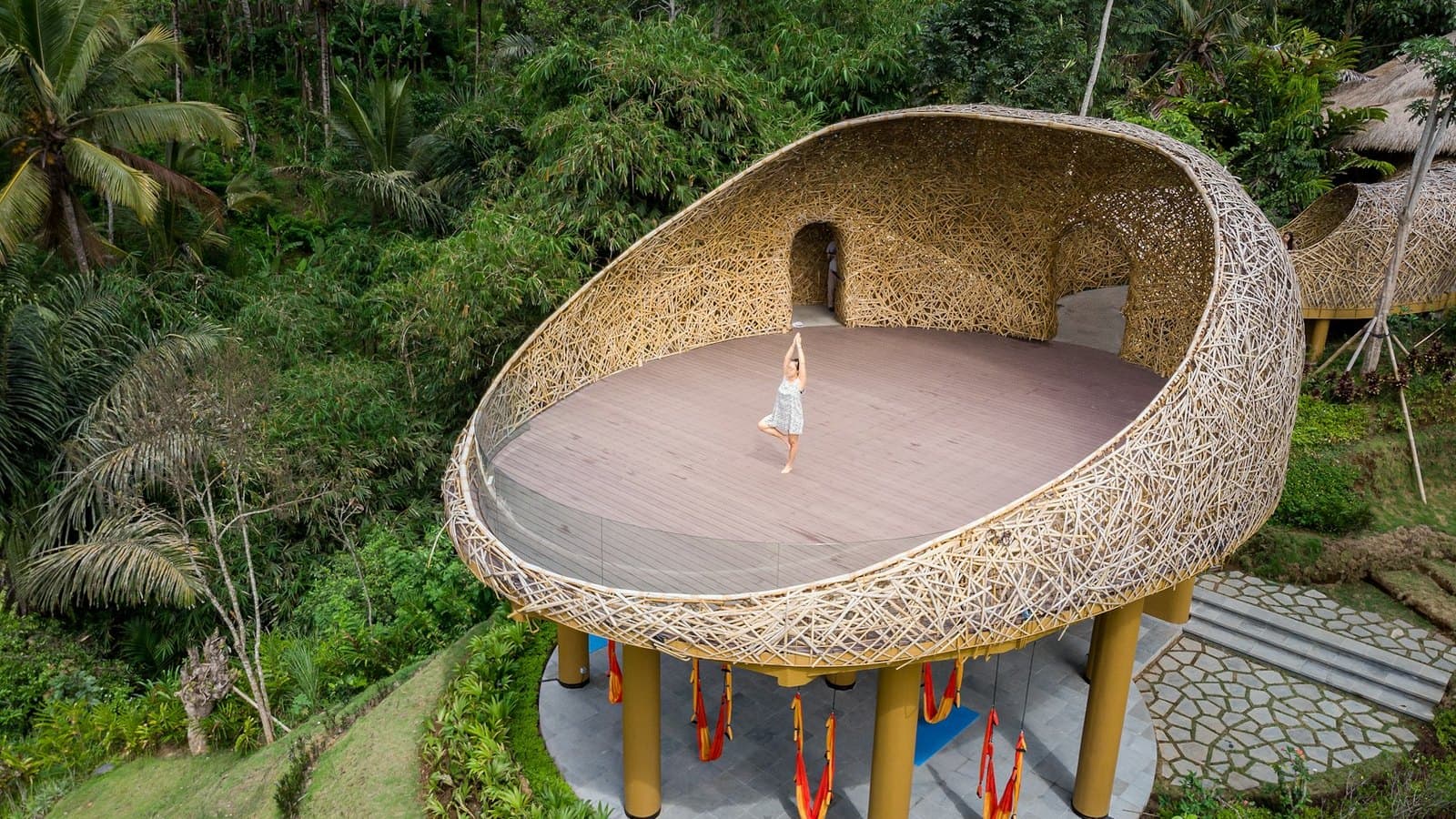
Ubud sells yoga the way it sells wellness generally: hard, and from every hotel deck with a view of a rice field. Underneath the marketing sits something real. Ubud is one of the world's genuine yoga capitals, with schools that have taught continuously for years, teachers with named lineages and formal training, and a practising local and long-stay community that would fill the mat room whether or not a single tourist walked in. The job here is telling the two apart before you book a class.
What makes it a real yoga town
The density is the tell: more experienced teachers per street than almost anywhere else on the island, several schools running multiple classes a day across styles, and a drop-in culture that lets a visitor walk in for a single session with no membership and no commitment. Ubud also runs teacher training programmes that draw students from outside Indonesia to spend weeks here, which is a different order of business than a resort spa offering a Tuesday sunrise class, and it is what keeps the serious end of the scene serious.
What a drop-in class involves
You turn up ten or fifteen minutes early, sign in, and pay for the single session rather than a package, no long-term commitment required. Mats and props are provided at an established school, so arriving empty-handed is normal. Classes are usually posted on a schedule board by style and level, mixed-ability rooms are common, and a teacher worth the name will ask about injuries or limits before the class starts rather than assume everyone in the room is the same.
The flags of an established school
A published, standing schedule that exists independent of any single tourist season is the first sign. Named teachers with stated training and lineage, rather than an unnamed instructor rotated in whoever is free that morning, is the second. A class that runs on a quiet Tuesday with three local regulars, not just a full room on a Saturday, tells you the school exists for its own sake. Mats, blocks and straps supplied without asking, and a room built for practice rather than a deck repurposed for the season, round out the list.
The honest note on retreats
A retreat sold as transformation, healing or a once-in-a-lifetime reset is selling a product, dressed in the language of the practice rather than the practice itself. That is not automatically a criticism. Plenty of visitors want exactly that kind of week, and a well-run retreat can deliver a genuinely good one. The only failure is not knowing which thing you bought: a real yoga education, or a comfortable week with yoga in the mornings. Reading a retreat's teacher bios and daily schedule before booking answers that question faster than any review.
The practical part
Ubud is hot and humid most of the year, and a room without air conditioning gets warm fast once a class is moving; a light towel and more water than feels necessary are the two things worth bringing that a beginner usually forgets. Morning classes catch the cooler air and the quieter version of town; evening classes catch the heat of the day still in the room but a slower, calmer crowd. Neither is wrong, and trying both on the same trip is the fastest way to learn which one suits you. In the wet months, a covered studio room is also simply the more comfortable plan than an outdoor deck, one of the better answers January offers a traveller stuck indoors by afternoon rain.
Around the mat
Ubud itself is built for this kind of morning: a class before the heat, then the Campuhan Ridge walk while the light is still soft and the path still empty, breakfast after. By the time the tour buses reach the ridge, the room where the morning class ran is already being swept for the next one, mats rolled and stacked against the wall, waiting for whoever walks in next.