Nyepi, Bali's Day of Silence: What Actually Closes
What happens during Nyepi, Bali's day of silence?
Nyepi shuts Bali for 24 hours, 06.00 to 06.00 WITA, all land, sea and air transport stopped, the airport included. Nyepi 2026 fell Thursday 19 March; the 2027 date is not yet fixed. (verified 19 August 2026)
For 24 hours the island stops. Every land, sea and air transport operator, the airport included, is not permitted to operate from 06.00 WITA on the day of Nyepi to 06.00 WITA the next morning. Nyepi 2026 fell on Thursday 19 March, Saka new year 1948, and the closure was announced exactly as printed: no flight in, no flight out, from before dawn to the following dawn.
The instrument, quoted
What governs the day is not a law in the ordinary sense. It is a Seruan Bersama, a joint appeal, issued on 6 March 2026 by the Forum Kerukunan Umat Beragama Provinsi Bali and the Kanwil Kemenag Bali, formally noted by the Governor of Bali, the Kapolda Bali and the Danrem 163/Wira Satya. Its operative clauses, verbatim:
2. Seluruh penyedia jasa transportasi darat, laut, dan udara tidak diperkenankan beroperasi selama pelaksanaan Catur Brata Penyepian, terhitung mulai hari Kamis, 19 Maret 2026 pukul 06.00 WITA sampai dengan hari Jumat, 20 Maret 2026 pukul 06.00 WITA.
All land, sea and air transport operators are not permitted to operate for the duration of Catur Brata Penyepian, from Thursday 19 March 2026 at 06.00 WITA until Friday 20 March 2026 at 06.00 WITA.
3. Lembaga Penyiaran Radio dan Lembaga Penyiaran Televisi tidak diperkenankan melakukan siaran.
Radio and television broadcasters may not broadcast.
4. Penyedia layanan (provider) jasa telekomunikasi seluler agar menonaktifkan layanan data seluler, dan seluruh penyedia jasa televisi agar tidak mendistribusikan siaran selama pelaksanaan Nyepi sebagaimana waktu yang telah ditentukan, dengan tetap memperhatikan layanan komunikasi darurat.
Mobile telecoms providers are asked to switch off mobile data, and television distributors to stop distributing, for the duration of Nyepi, while preserving emergency communications.
5. Seluruh masyarakat dan wisatawan tidak diperkenankan bepergian/keluar rumah serta menyalakan petasan/mercon, pengeras suara, bunyi-bunyian, lampu penerangan berlebihan, maupun aktivitas lain yang dapat mengganggu kekhusyukan Hari Suci Nyepi dan ketertiban umum.
The whole population and tourists are not permitted to travel or leave the premises, nor set off firecrackers, use loudspeakers, make noise, use excessive lighting, or do anything else that disturbs the observance or public order. Tourists are named in the text, by the word wisatawan, not folded into "the community" and left for a hotel to translate.
6. Pelaku usaha jasa akomodasi, jasa hiburan, serta pengelola destinasi wisata di Bali tidak diperkenankan mempromosikan kegiatan usaha dengan menggunakan branding atau aktivitas komersial yang mengatasnamakan Hari Suci Nyepi.
Accommodation, entertainment and attraction operators may not promote commercial activity in the name of Nyepi. A hotel selling a branded "Nyepi package" is doing something the appeal specifically asks it not to.
Nyepi meets Takbiran
Nyepi 2026 fell on the eve of Idul Fitri, and three clauses of the appeal exist for no other reason than to reconcile the two nights. Clause 7 notes the coincidence with malam Takbiran, the eve of Eid marked by Muslims with a night of chanted prayer. Clause 8:
Umat Islam diperkenankan melaksanakan Takbiran di Masjid atau Mushola terdekat dengan berjalan kaki, tanpa penggunaan pengeras suara, tanpa menyalakan petasan/mercon atau bunyi-bunyian lainnya, serta menggunakan penerangan secukupnya, mulai pukul 18.00 WITA sampai dengan pukul 21.00 WITA.
Muslims are permitted to hold Takbiran on foot, at the nearest mosque or musholla, without loudspeakers, firecrackers or other noise, using only minimal lighting, between 18.00 and 21.00 WITA. Clause 9 assigns responsibility for that event's own security to mosque and musholla committees, kept separate from the Nyepi observance around it.
A joint appeal, not a statute
Calling this document "the law" overstates what it is. Calling it "a custom" understates what it does. It is a Seruan Bersama, an appeal signed by religious and community bodies and noted by the Governor, the police chief and the military commander, not a Perda or a Pergub passed through a legislature. Clause 10 names who keeps order, and it is not one body:
Prajuru Desa Adat, Pengurus Masjid atau Mushola, Pecalang, Linmas, serta Aparat Desa/Kelurahan bertanggung jawab untuk bersama-sama menjaga keamanan dan ketertiban pelaksanaan Nyepi maupun kegiatan Takbiran di wilayahnya masing-masing, dengan berkoordinasi secara sinergis bersama aparat keamanan.
The customary village council, mosque and musholla administrators, pecalang, Linmas civil defence and village officials are responsible for jointly maintaining security and order for both Nyepi and Takbiran in their own areas, coordinating with the security forces. Pecalang, the customary security most travel pages mention alone, are one of five bodies named, not the sole enforcer. No published statute sets a fine for a tourist who steps outside during Nyepi, and no source found in researching this page states one. The authority is customary and civil, the reach is total, and the two facts are not in tension: five bodies share the work every year without a criminal code behind them, because the appeal is addressed to, and honoured by, an island that treats the day as sacred first and regulated second.
The airport, closed under NOTAM, not just quiet
ANTARA, the state news agency, reported on 13 March 2026 that I Gusti Ngurah Rai airport would suspend all scheduled commercial operations from 06.00 on 19 March to 06.00 on 20 March 2026 under NOTAM A0096: 440 flights grounded, 231 domestic and 209 international. The airport's general manager, Nugroho Jati, said staff would remain on duty only for "emergency flight operations, such as medical flights or special flights, if necessary and with the approval of the relevant authorities." There is no reduced schedule to plan around. A flight booked to land or depart inside that window is not going to happen.
Ngembak Geni, and the night before
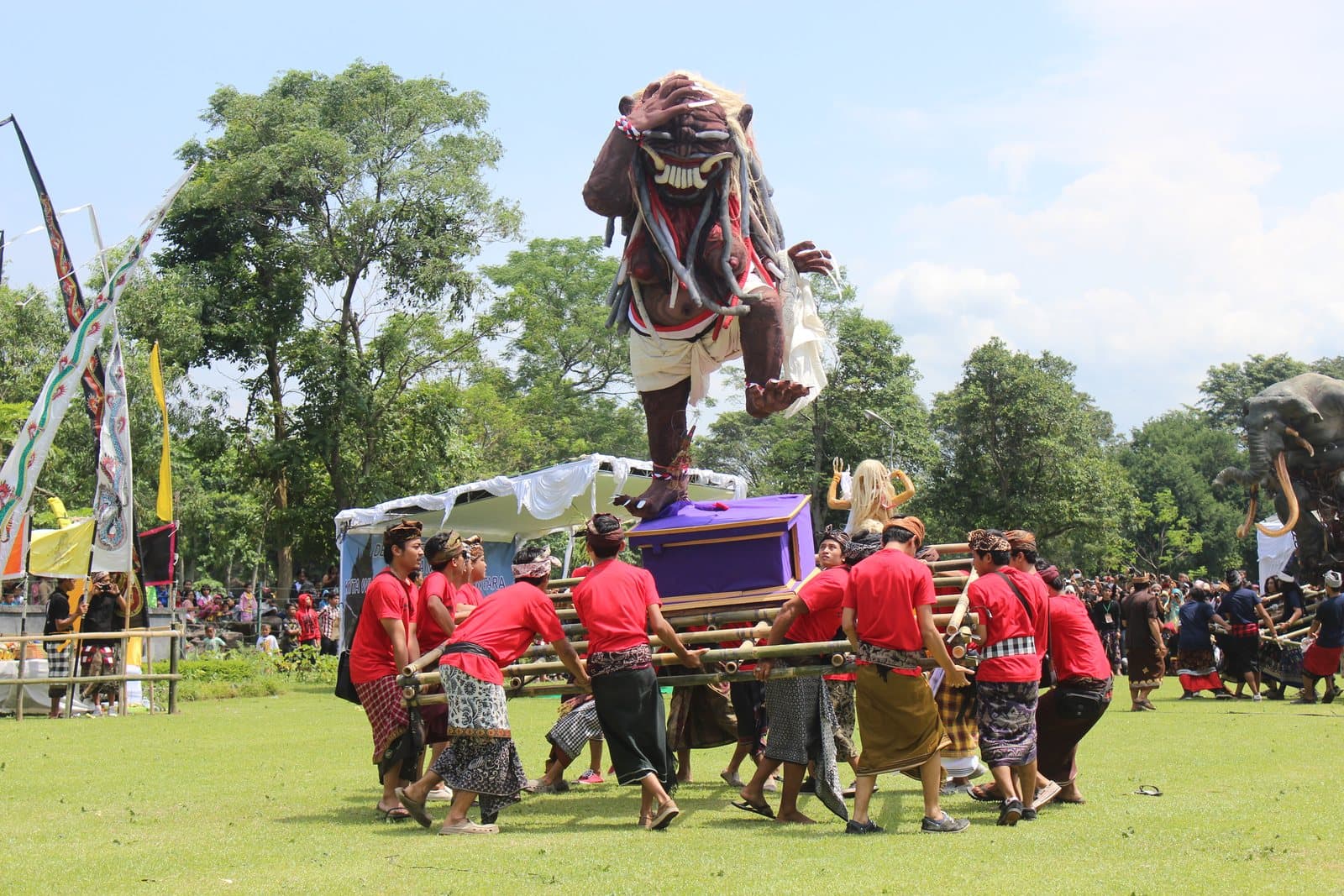
The evening before Nyepi carries its own event: Tawur Kesanga, 18 March 2026 in the circular, when villages parade ogoh-ogoh, giant effigy figures, through the streets before the silence begins. The morning after, Ngembak Geni, everything most people picture reopening in a single push happens then, not gradually: transport, broadcasting, mobile data and the airport all resume together at 06.00 WITA on the Friday.
What a traveller does with the day
Staying inside a hotel is permitted; leaving it is what the appeal addresses. Hotels run a reduced service, typically candlelit after dark to hold down light, and most keep guests fed without asking them to step outside. The night sky over Bali on Nyepi is the clearest of the year by simple mechanism: no street lighting, no traffic, no firecrackers, nothing but starlight over a dark island. A traveller who plans to be inside for it gets an experience genuinely unlike anything sold elsewhere. A traveller who did not know it was coming gets a missed connection they could not have flown out of anyway, on a date the airline knew about months in advance.
What we could not establish
No official source publishes a penalty schedule or enforcement figures for tourists who leave their accommodation during Nyepi. The clause 10 authorities are customary and civil, not codified as police powers, and nothing found sets a fine. A page that printed one would be inventing it.
The Nyepi 2027 date itself is unresolved. Kalender Bali Digital gives Monday 8 March 2027, with Tilem on 7 March and Ngembak Geni on 9 March. A large set of aggregator sites gives Tuesday 9 March instead. Neither is decreed: the SKB 3 Menteri that fixes Indonesia's holiday calendar had not been issued as of August 2026, is expected around December 2026, and bimashindu.kemenag.go.id, the national authority on Hindu holy days that would settle the question, could not be reached by any method tried. This page carries the decree's answer the day it appears. Until then, no March 2027 flight should be booked tight around either candidate date, and see March in Bali for how the Lebaran calendar complicates that month regardless of which day Nyepi falls on. The national holiday cost of getting a Bali trip's dates wrong is covered in what a Bali entry actually costs.
Also asked
- Is Bali's airport closed during Nyepi?
- Yes, fully, not reduced. In 2026 Ngurah Rai suspended all scheduled operations 06.00 on 19 March to 06.00 on 20 March under NOTAM A0096, 440 flights grounded, 231 domestic and 209 international, per ANTARA quoting the airport's general manager. Staff stayed on duty only for medical and emergency flights, with the approval of the relevant authorities.
- What is the Nyepi 2027 date?
- Not settled. Kalender Bali Digital gives Monday 8 March 2027; a large set of aggregator sites give Tuesday 9 March. The joint ministerial decree that fixes Indonesia's holiday calendar had not been issued as of August 2026 and is expected around December 2026. Neither date should be treated as confirmed until it is.
- Can tourists leave their hotel during Nyepi?
- No. The Seruan Bersama of 6 March 2026 names wisatawan, tourists, explicitly in clause 5: the whole population and visitors alike are not permitted to travel or leave the premises, nor light fires, use loudspeakers or make noise, for the 24 hours the appeal covers.
- Is the Nyepi shutdown a law?
- Not in the strict sense. The operative document is a Seruan Bersama, a joint appeal by Bali's interfaith council and religious affairs office, not a Perda or a Pergub. Clause 10 assigns keeping order to five actors jointly: the customary village council, mosque and musholla administrators, pecalang, Linmas civil defence and village officials, none of them a statutory police power.
How we verified this
- Seruan Bersama of 6 March 2026, FKUB Bali and Kanwil Kemenag Bali, noted by the Governor, the Kapolda and the Danrem 163. Clause 2 stops transport 06.00 WITA 19 March to 06.00 WITA 20 March 2026. Read from an HTTP 200 capture of 17 August 2026; the server itself was unreachable on 19 August.
- Governor of Bali circular implementing SKB 1497/2025, 2/2025, 5/2025. Lists Nyepi Saka 1948 as Thursday 19 March 2026, cuti bersama 18 March, Tawur Kesanga 18 March. Read from an HTTP 200 capture of 17 August 2026; the server itself was unreachable on 19 August.
- ANTARA, 13 March 2026. Ngurah Rai closed 06.00 on 19 March to 06.00 on 20 March 2026 under NOTAM A0096, 440 scheduled commercial flights suspended, 231 domestic, 209 international, staff retained for medical and emergency flights. GM Nugroho Jati quoted.
- Kalender Bali Digital gives Nyepi Saka 1949 as Monday 8 March 2027, Tilem 7 March, Ngembak Geni 9 March. A large set of aggregator sites give Tuesday 9 March instead. No SKB 3 Menteri for 2027 issued; bimashindu.kemenag.go.id, the authority that would settle it, times out on every method tried.
What changed
- First publication, drawing the genre distinction between the Seruan Bersama and a statute, and printing the 2027 date as contested rather than picking one.
- Fact audit: corrected the enforcement clause from 8 to 10 and named all five actors it assigns, not pecalang alone. Added clauses 7 to 9 on the Idul Fitri coincidence. Recorded the 17 August capture dates. Softened the airport paragraph to match ANTARA's pre-event framing.