Activities · The Bukit and the south
The Jimbaran seafood dinner
The fish is sold by weight, and the weighing in front of you is the whole transaction. How the beachfront grill warungs price a plate in four separate charges, and what to settle before anything goes on the scale.
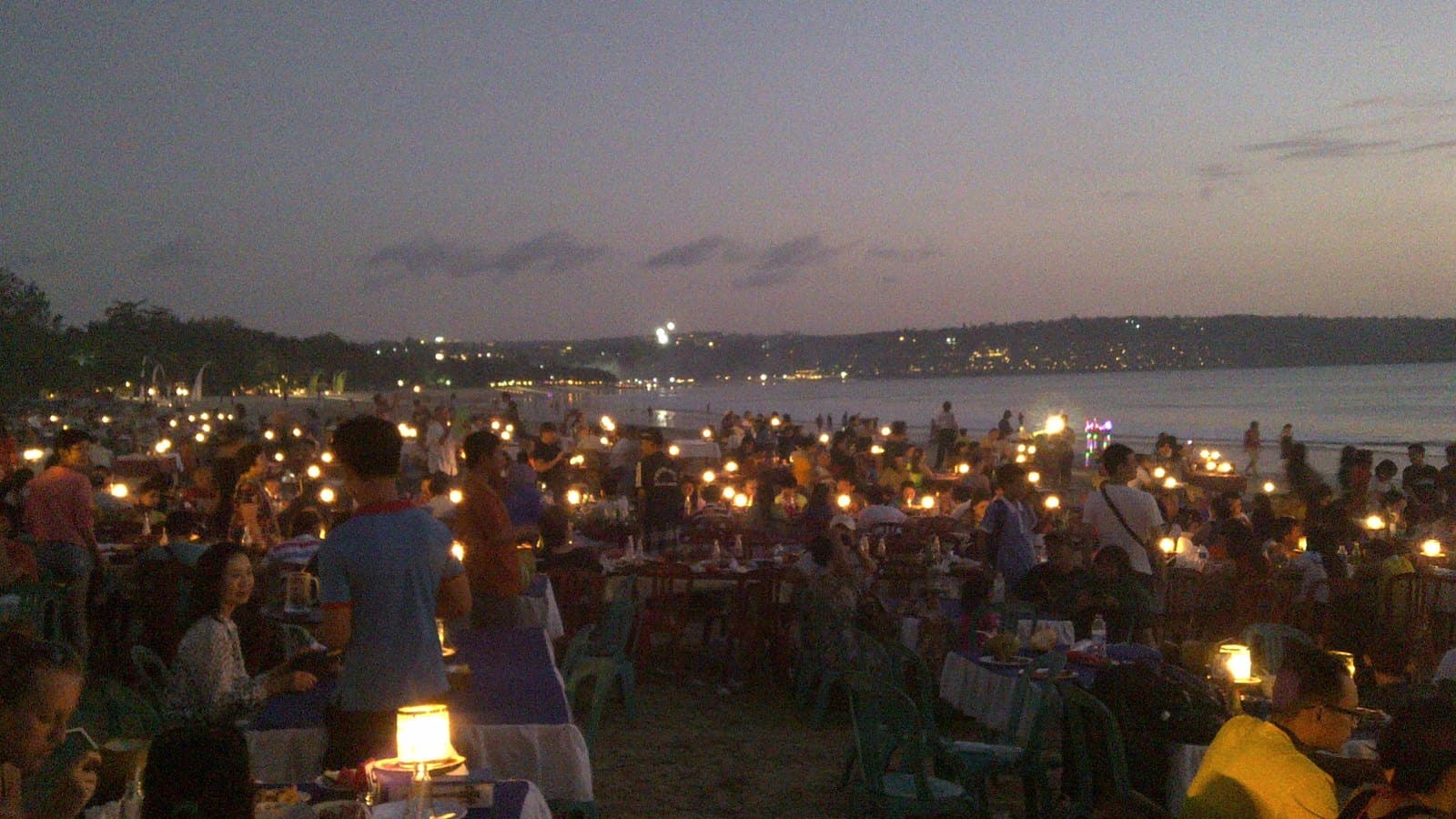
At a Jimbaran beach warung the menu is not really a menu. It is an invitation to walk over to a table of iced fish and shellfish, point at what you want, and watch it placed on a scale. Everything that follows, the price, the size of the bill, whether the evening feels fair or not, comes out of that one moment at the scale, not out of anything printed on a page.
How the weighing actually works
Fresh catch sits on ice at the front of the warung or in the stalls of Kedonganan market nearby, laid out by species: snapper, grouper, squid, prawns, sometimes lobster kept apart from the rest. You choose the piece or the portion you want, it goes onto a scale in front of you, and the reading becomes the basis for what you pay: a rate for that species, multiplied by the weight just shown on the dial. Only after that does the fish leave the table for the grill, so the weighing happens before any cooking, in full view, not folded into a total presented afterward.
The rate is not one number
What a kilogram costs depends on which animal is on the scale, and it changes by species in a way a single posted price cannot capture: reef fish, prawns and squid sit at different rates from each other, and lobster in particular is usually priced apart from everything else and moves with what came in that day. A rate quoted for snapper tells you nothing about what the prawns will cost, and neither tells you what the lobster costs. Ask for the rate on the specific animal in front of you before it goes on the scale, not the general one for "seafood."
The bill is several charges, not one
The weighed seafood is only the first line. Most warungs charge separately for the cooking itself, again often scaled to the weight of what you ordered rather than folded into the seafood price; rice, sambal and a vegetable side are frequently extra rather than included; and drinks, service and any table charge for a beachfront seat at sunset add further lines still. A guest who agreed only to the number on the scale and asked about nothing else is the guest most likely to find a bill larger than expected, not because anyone lied, but because four separate charges arrived as though they were one.
What to settle before anything is weighed
Before the fish reaches the scale, ask four things: the rate per kilogram for this specific species, whether the cooking charge is separate and how it is calculated, whether rice and sides are included or billed on top, and whether the table itself carries any charge for the evening. Watch the scale as the piece is weighed rather than trusting the total that appears later, since that reading is the one number the whole bill is built from. None of this takes more than a minute, and it is the only minute of the evening that actually decides what you pay.
Market or warung, the two ways in
Buying at Kedonganan market and carrying the catch to a grill stall nearby is the working version of the ritual, cheaper and closer to how the bay has always fed itself; the beachfront restaurants further south run the identical mechanism inside table service and a sunset view, at a different price for the same convenience. Neither is the wrong choice; they are two different evenings built on the same scale.
Timed to the sunset, or timed to the flight
The tables fill as the sun drops, and the bay's grills are timed to that light rather than to a clock; the same evening pairs naturally with an earlier stop at the Kecak performance at Uluwatu, the drive down finishing at Jimbaran as the light goes. The travel time matrix prices that drive plainly, along with the short run back to the airport that makes Jimbaran a natural first or last dinner of a trip.
The last fish of the night goes onto the scale as the tide comes up past the grill stands, the dial lit by a single bulb, the number on it the only thing anyone at the table actually needs to agree on before it turns to smoke.