Activities · The north and the west
The dawn dolphin trip at Lovina
Wild spinner and bottlenose dolphins do surface off Lovina at dawn, and so do dozens of boats chasing the same pods for the photograph. What the trip is, why the crowding happens, and what a better operator does instead.
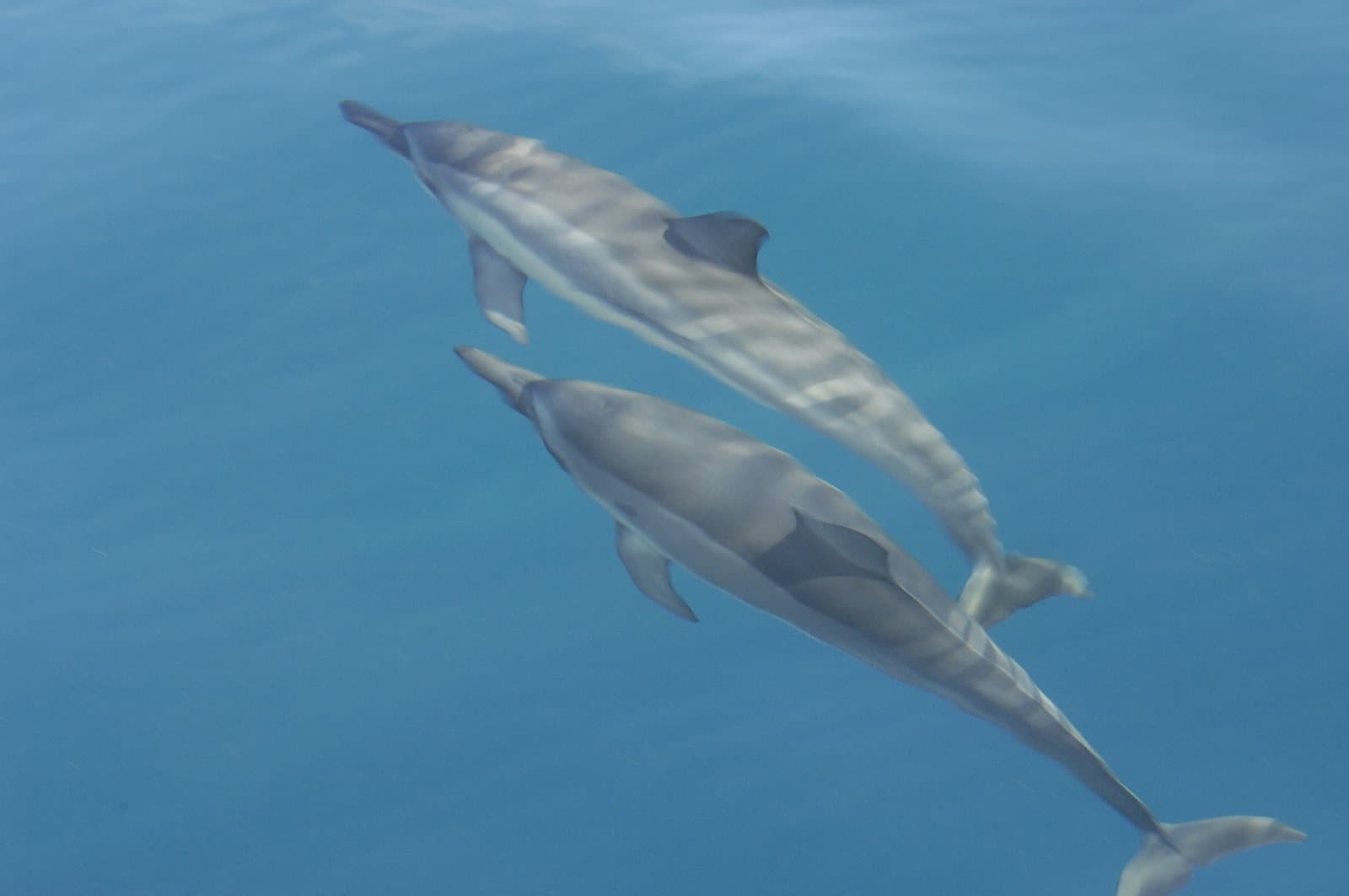
The Lovina dolphin trip is a real wildlife encounter: wild spinner and bottlenose dolphins live in the Bali Sea off this coast, and a boat that goes out before sunrise finds them most mornings. What tourism has built on top of that fact is a fleet. Dozens of jukung outriggers leave the beach in the dark together, and once one boatman spots a pod on the radio, every other boat within reach turns toward the same water. What should be a quiet crossing becomes a scrum of engines closing in on the same animals for the same shot.
What the trip actually is
Boats leave the beach well before first light, timed so the crossing lands at sunrise, when the water is calmest and dolphins are most often near the surface. The boat itself is a jukung, a narrow outrigger with a small outboard, holding two or three passengers and a boatman who reads the water for fins rather than steering to a fixed spot. When it works, it works simply: engine cut, boat drifting, a pod passing close enough to hear before it moves on.
Why the boats crowd
The crowding is not one bad operator; it is the economics every boatman faces. Each boat is paid per trip, not per calm approach, and a boatman who holds back while a rival closes on the pod first loses the sighting his passengers paid for. Pods are found by word of mouth and handheld radio, so once one boat locates dolphins, the news travels to every boat within minutes, and they converge together. No single boatman gains by hanging back, even though every boatman would prefer calmer mornings. It is a problem individual restraint cannot fix, and only a shared rule among operators can.
What the crowding may do to the dolphins
Spinner dolphins rest in sheltered coastal water by day, which is the entire mechanism behind a dawn boat trip: pods are findable because they are resting close to shore, not hunted down in open water. That fact is what makes the crowding a real question, not a sentimental one. Fumagalli and colleagues, writing in Royal Society Open Science in 2018, studied spinner dolphins at three Red Sea reefs and found rest the behaviour most sensitive to disturbance in most species studied, since interrupted rest carries knock-on costs to feeding and navigation; comparing an unregulated site against one under a boat-access closure, they measured less disrupted resting where rules limited access, and concluded the protection worked. A separate 2018 paper in the same journal, by Tyne and colleagues, followed spinner dolphins off Hawaii Island exposed to boats within close range for most daylight hours and found no measurable effect on their resting. Both studies are on the same species, in Egypt and Hawaii rather than Bali; no published study of the Lovina fleet was found, and the evidence is not unanimous, but it points toward distance and calm engines as the choice that can only help.
What a better operator does
The difference between operators is conduct, not luck. A boatman working well cuts his engine near dolphins rather than pushing in, lets the pod set the distance, and does not chase a pod that has moved away. None of that guarantees a longer look, and an honest operator says so before you board: a wild pod that keeps moving will not stop for a fare already paid.
The honest alternative
Nobody selling a seat on a pre-dawn boat can honestly promise a sighting: the dolphins are not fed, tracked or held to any schedule of their own. The alternative that removes the pursuit question entirely is watching from the beach: dolphins surface close enough to shore at Lovina on many mornings that a walk along the sand at first light, coffee in hand, sometimes delivers the same fins with no boat at all. Travellers who do want the boat do better asking directly whether an operator limits its own boats and holds distance than trusting a brochure. Compare it against the manta encounter off Nusa Penida, a cleaning station where the animal keeps its own appointment rather than being found and followed; the seasonal guide covers which months give Lovina's sea its calmest mornings for either trip.
The Bali Sea at dawn off Lovina is flat, grey turning to gold, and for a few minutes before the fleet finds its pod, quiet enough to hear the water break where a fin surfaces on its own.