Activities · The east coast
Walking the Sidemen valley
No ticket, no gate, no operator: the walking at Sidemen is the rarest thing left on the island, a landscape you visit by opening the guesthouse door and turning uphill.
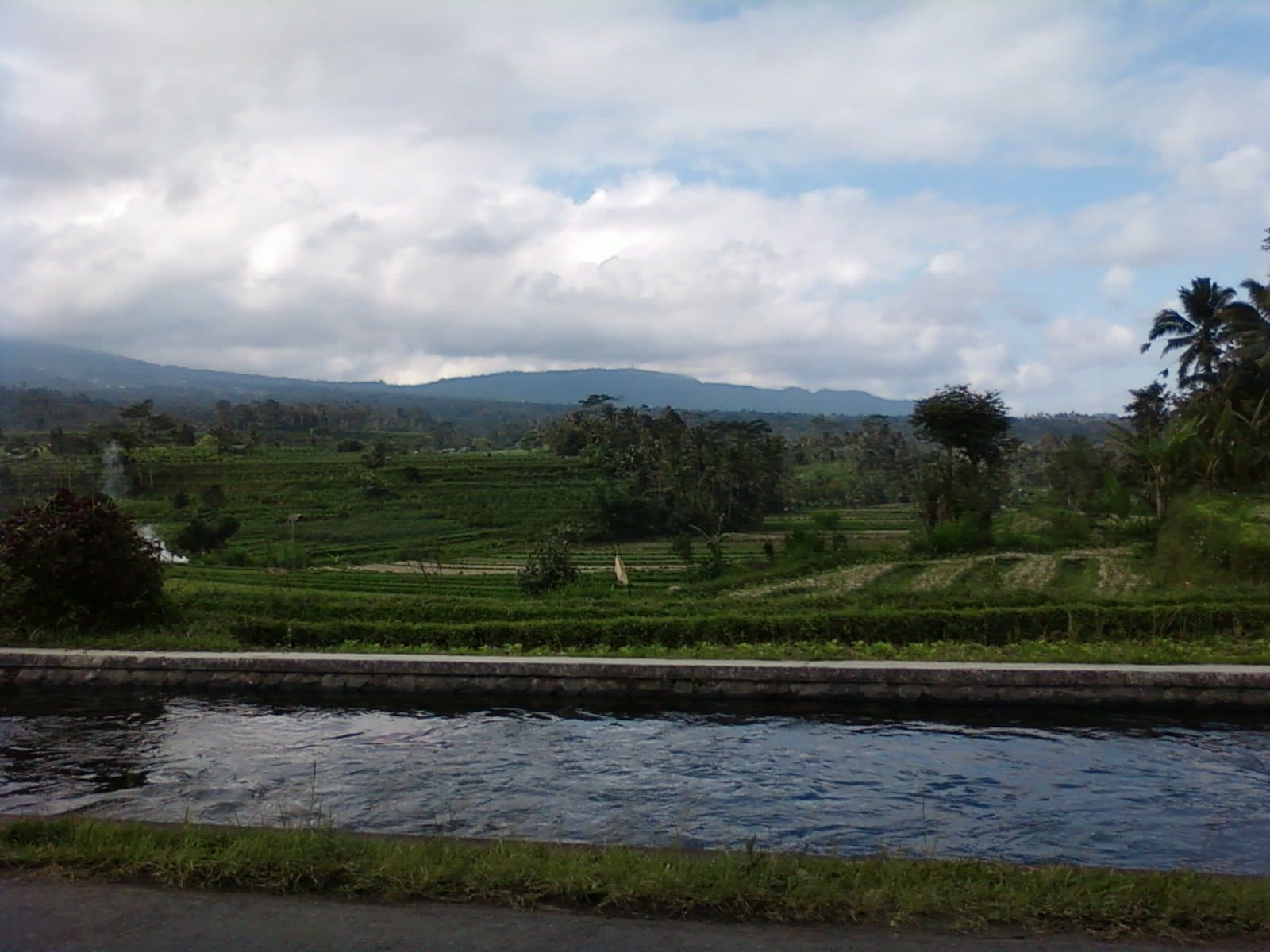
Ubud sold its rice terraces to the world decades ago and has been managing the crowd ever since. Sidemen has not, not for lack of a photogenic terrace but because the valley has stayed quiet enough that the walking never became an industry. There is no ticket booth here, no swing platform, no fixed viewpoint with a queue behind it. A guest steps out of a guesthouse in the morning, turns uphill, and the day's activity has already started.
The valley itself
Sidemen sits on the flank of Mount Agung in Karangasem, terraced rice climbing the slope in every direction and the volcano filling the skyline on a clear morning. The Unda river cuts through the lower valley, and villages along its length keep a weaving tradition alive, songket and endek cloth worked on hand looms in houses a walker passes without being steered toward them. None of this was built for visitors. It is a working agricultural valley that happens to be extraordinary to look at, a different thing from a destination designed around the view.
How the walking actually works
Paths run along the raised bunds between paddies, connecting hamlets that have used them for generations, and a fit walker can string together a loop of a couple of hours without repeating ground. Most guesthouses can arrange a local guide for a morning, and a few run set routes climbing higher toward Agung's lower slopes. The other option, and the one that makes Sidemen unusual, is leaving the door on your own: no booking, no meeting point, no operator standing between the traveller and the terrace.
Walking through someone's farm
The paths cross working land, not parkland, and the etiquette follows from that. Stick to the raised bunds rather than cutting across a flooded paddy, since a footprint through standing rice is a real loss to the family that planted it. Give way to anyone carrying tools or driving cattle, and ask before photographing someone at work up close rather than assuming the view includes them. A quiet morning greeting goes further here than anywhere touristed on the island, largely because it is still rare enough to be noticed.
What a guide adds that a map cannot
A map shows the paths. It does not show which channel is a subak line and which is a private ditch, or which fork leads onto a family's own access track. A local guide reads the valley the way a farmer does: naming what grows in a given terrace at a given month, explaining how the subak system times the flooding of one paddy against its neighbour, and knowing which weaving house welcomes a knock. None of that stops a walker without a guide from having a good morning. It turns a scenic walk into an explained one.
The weaving villages
Several hamlets weave songket, a supplementary-weft cloth worked with gold or silver thread for ceremonial use, and endek, a resist-dyed weave closer to everyday wear. Workshops sit along the same lanes the walking paths use, looms visible from the road, and visitors who stop and ask are generally welcome to watch the work. It is a household trade, not a demonstration staged for a bus tour.
Season and light
The terraces run the same calendar as the rest of the interior: deep green through and just after the wet months, golden and drier late in the dry season, with Agung most likely to stand clear of cloud in the early morning before the day builds heat and haze. The seasonal guide prices that trade month by month. Early starts reward walkers with both the coolest air and the best chance of an uncovered volcano.
Why the east, not the south
Sidemen sits inland in Karangasem, close enough to Amed and Lempuyang that a traveller based here reaches both without the long drive a southern base requires. The travel time matrix prices that arithmetic plainly: a night or two in the valley turns a long day trip into a short morning drive.
The rice keeps growing whether or not anyone photographs it, and tomorrow morning it will be a slightly different green than today.