Activities · The east coast
The USAT Liberty wreck at Tulamben
A US Army cargo ship torpedoed in 1942, beached, then pushed into the sea by the 1963 eruption of Agung. What a snorkeller reaches from the sand, what a diver sees along the rest of the hull, and the walk over stones between them.
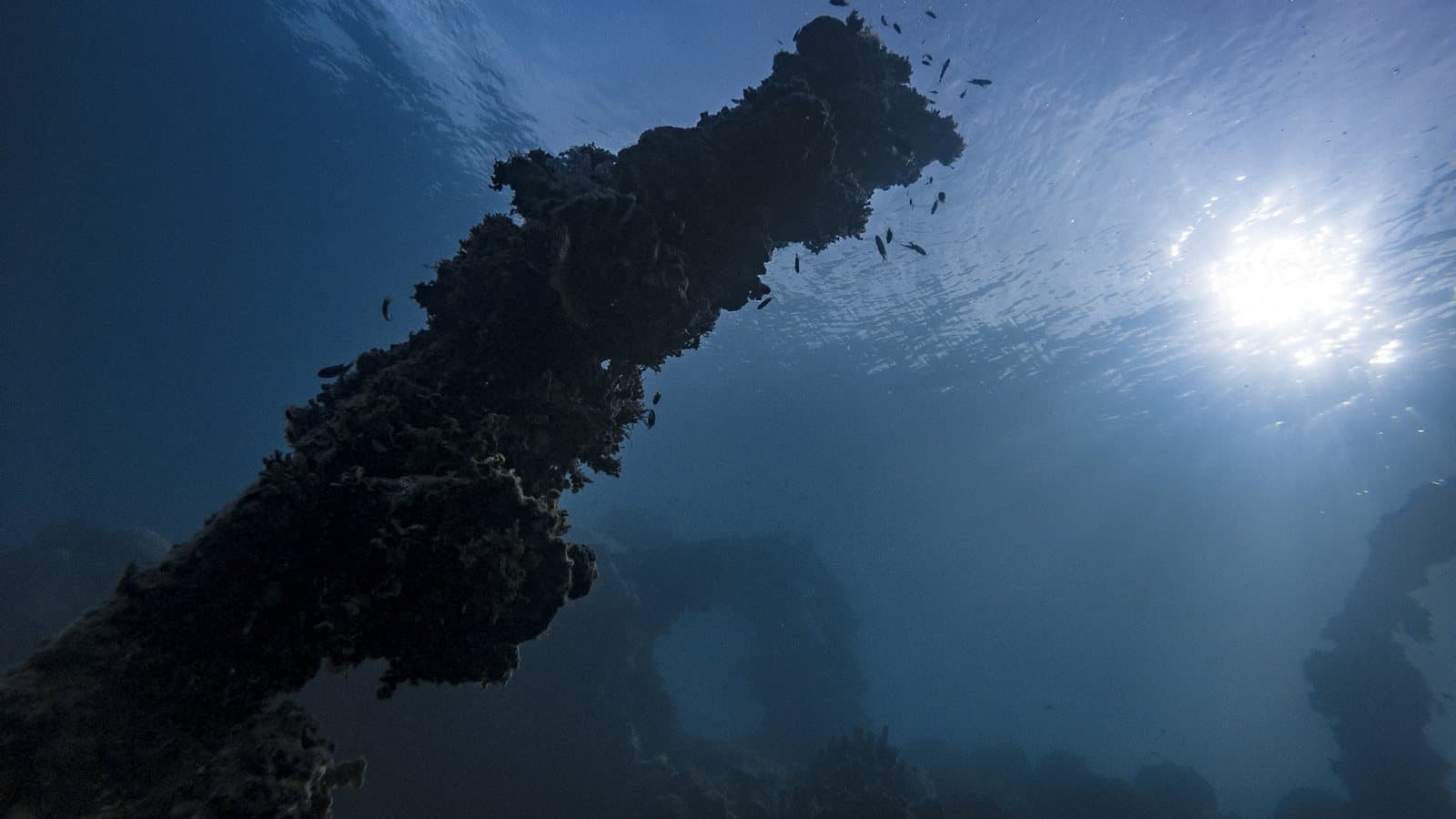
The USAT Liberty lies close enough to a black stone beach in Tulamben that snorkellers reach its shallow end by kicking out from the shore, no boat between the sand and the ship. That single fact, more than the wreck's size or its history, is why this is one of the most visited large wrecks anywhere: entry costs nothing but a walk over stones, and the sea does the rest.
How it got here
The Liberty was a US Army cargo ship torpedoed by a Japanese submarine in the Lombok Strait in January 1942. Under tow toward Singaraja and taking on too much water to make port, she was beached at Tulamben instead, and sat there on the sand for two decades. In 1963 Mount Agung erupted, and the tremors that came with it broke the hull apart and slid it off the beach into the sea, where it has stayed since, lying roughly parallel to the shore and largely intact from bow to stern.
Getting in the water
The dive itself is not the hard part; the walk to it is. Entry is across loose black volcanic stones, round and uneven underfoot, and more than one visitor's day has ended at the water's edge rather than in it. Reef shoes or dive booties earn their weight here. Local porters, mostly women from the village, carry dive gear down to the waterline for a fee, a trade that predates the wreck's fame and keeps tanks off travellers' shoulders on the stones.
The early-morning rule
Day-trip buses from the south, out of Amed and further afield, tend to arrive mid-morning, and the site changes completely once they do: clear water churns with fins, and the calm that makes the wreck photographable is gone. The people who get the good version go at first light, before the buses leave Kuta and Sanur, which in practice means sleeping somewhere nearby the night before rather than making the drive that morning. The travel time matrix prices the drive from the south honestly, and it argues for a base in Amed over a same-day round trip.
What a snorkeller gets, what a diver gets
The bow section sits in only a few metres of water, shallow enough that a snorkeller swims directly over coral-encrusted metal and the fish that have made a reef of it, no certification required, in the same spirit as snorkelling with mantas off Nusa Penida: a genuine encounter with something large, open to anyone who can swim. Divers get the rest of it, the hull's full length down toward the stern in deeper water, swim-throughs between collapsed plating, and the scale that only shows itself once you are level with the whole ship rather than looking down on one end of it.
The wreck at night
Night diving is Tulamben's other life. The fish that hide from the daytime crowd, tucked into the wreck's crevices and the rubble around it, come out once the light goes, and a torch beam picks out colour in the coral that daylight washes flat. Several dive shops run night sessions specifically on the Liberty, and the site with almost nobody else on it is a different experience from the one the day-trippers buy.
What not to touch
The Liberty carries the standing of a war wreck, whatever the precise legal status of the ground it rests on, and the people who dive it professionally treat it that way: nothing is taken from the site, nothing is pried off the hull for a souvenir, and coral growing over the metal is left to keep growing. Its gun mounts still stand upright under that coral, aimed at nothing, the only ordnance Tulamben has seen since 1963.