Activities · The north and the west
The waterfall walks around Munduk
Where Sekumpul is one big descent to one big waterfall, Munduk is a string of falls linked by paths through clove and coffee, the closest thing the island has to waterfalls as a walk rather than a stop.
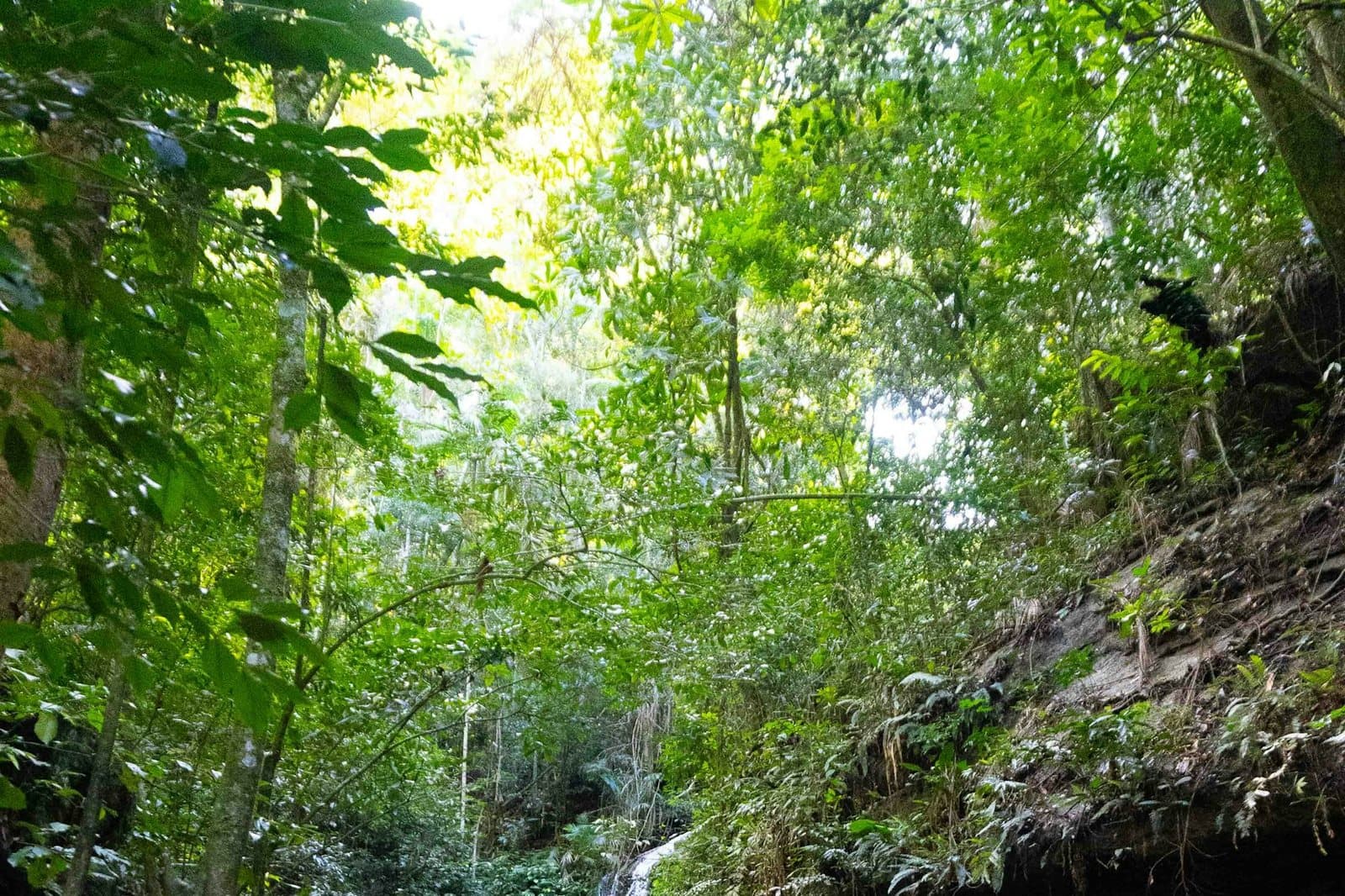
Sekumpul asks for a single descent to a single wall of water and a climb back out. Munduk asks for something else: a village on a ridge with several waterfalls within walking range of each other, connected by paths through working plantations rather than by a road. It is the one part of Bali where seeing waterfalls means walking between them, not driving from car park to car park.
The village on the ridge
Munduk sits above 800 metres on the old Dutch-era road through the northern highlands, and the altitude sets the terms for everything else: mornings clear and cool, afternoons that cloud over, evenings cold enough for a layer most travellers did not pack for the coast. The village itself runs along a single road of guesthouses built into old plantation houses, and the plantations are not scenery, they are the local economy: clove trees and coffee gardens working the slopes on both sides of the ridge, the same ground the waterfall paths cross.
The falls, and how they connect
Below the village, a handful of named falls sit within a walking morning of each other: Munduk falls and Melanting falls are close enough to link on a single loop through the plantations, a path rather than a transfer between them. Banyumala, over the ridge, is its own separate walk with its own trailhead, worth the detour rather than an add-on. GitGit sits further east along the main road toward the coast, closer to a stop on the way through than a leg of the Munduk loop itself. None of these falls rival Sekumpul for sheer scale, and that is the trade the village makes: smaller water, more of it reachable on foot in a single outing.
The paths themselves
Every one of these trails shares the same character: dirt and stone underfoot, steps cut into slopes wherever the gradient demands them, and mud that does not fully dry even in the driest weeks because the altitude keeps the ground damp under plantation shade. Grip matters more than speed. Trainers or sandals with a proper heel strap earn their keep here, and anyone treating the walk as a stroll between photo stops will find the steepest sections correct that assumption quickly.
What the wet season adds
The wet months documented on the January page fill every fall on this ridge to its fullest, which is the best argument for coming in the rain and the same reason the paths turn from merely damp to genuinely slippery. Mud deepens on the steps, stream crossings run higher, and a walk that is a stroll in August asks for real attention in the wet months. The falls reward the season; the footing punishes carelessness in it.
Guided or on your own
The main loop near the village is walked without a guide by most visitors who come prepared, the paths worn clear enough to follow. A local guide earns the fee at the less obvious trailheads, at Banyumala especially, where the way in is easy to miss from the road and a local knows which crossing holds in high water and which does not. Either way, asking at the village before setting out costs nothing and settles which version of the walk you are choosing.
Pairing with the lakes
Munduk sits on the same highland road as Bedugul and its crater lakes, close enough that the two make a single stage rather than two separate stops; the travel time matrix prices the road between them plainly. Travellers building a north loop often pair Munduk's walking morning with the harder descent at Sekumpul further along the same hills, one waterfall day earned on foot, the other earned on the steps.
The clove trees above Melanting drop their scent into the path long before the water is in earshot, which is the ridge announcing itself before the falls ever do.