Activities · The Nusa islands
Nusa Lembongan and Nusa Ceningan
The quieter two of the three Nusa islands, linked by a narrow yellow footbridge that scooters cross one at a time. Why travellers who found the Penida day trip too rushed often prefer these two, and why the seaweed farms are not the unbroken tradition the photographs sell.
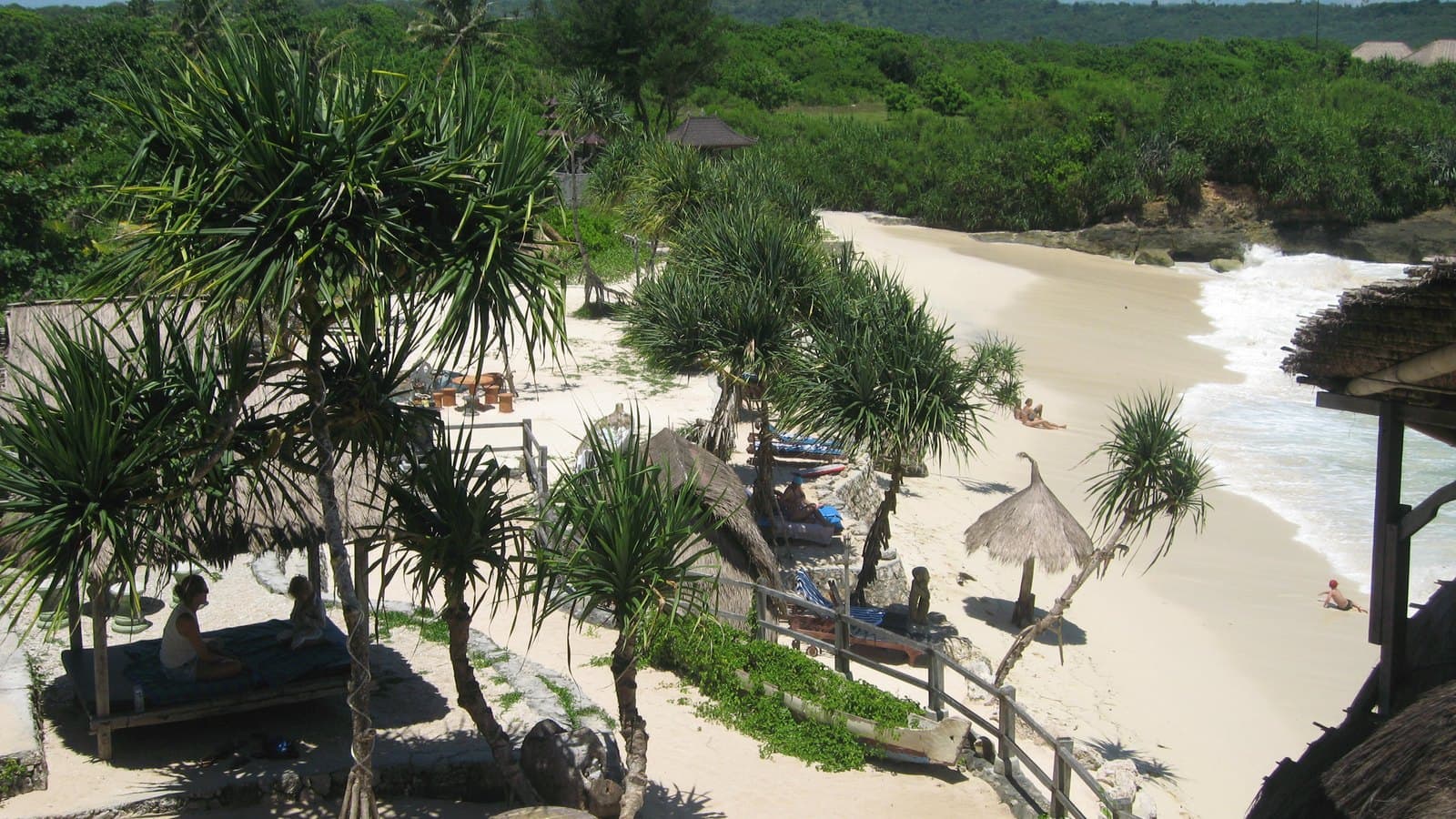
Travellers who came back from Nusa Penida complaining about the roads, the crowds at Kelingking, or a whole day spent driving between viewpoints often assume the rest of the Nusa group runs on the same terms. It does not. Nusa Lembongan and its smaller neighbour, Nusa Ceningan, feel like the same trip and answer almost everything Penida gets criticised for.
Two islands, one narrow bridge
A channel narrow enough to look swimmable separates Lembongan from Ceningan, crossed by a footbridge built low over the water and painted bright yellow, now as recognisable a landmark as any beach on either island. It carries foot and scooter traffic only, narrow enough that riders coming the other way take turns rather than pass, which sets the pace for the whole crossing: slow, deliberate, nothing like the rush of a Penida boat day.
The seaweed is not the timeless thing it looks like
Lembongan's economy was seaweed before it was tourism, and the racks in the shallows toward Ceningan are photographed as though they had always been there. They had not, and for a while they were not there at all. Andréfouët, Dewantama and Ampou, writing in Ocean and Coastal Management in 2021, tracked the farms from satellite imagery and found them shrinking from 2012 and gone from the island by 2017, after supporting households there for more than thirty years. Interviewing fifty former farmers the year after, they found failed crops, falling prices and nowhere left to dry the algae as the coast built up, and they found where the farmers went: half into tourism, a quarter into the construction that tourism was driving.
Then the pandemic closed the thing that had replaced it. The UN Development Programme reported from the island that people who had been working in laundries, spas and rental shops went back to the ropes, and the beach facing Ceningan, until then the quiet part of the island, filled up. What the farms amount to now that the flights have returned is a question we cannot answer from a desk, and we would rather say so than sell you a photograph of an unbroken tradition. On the northeast side, mangrove channels offer a flatter, quieter contrast, paddled rather than swum, calm enough to be the rest day between the surf breaks and dive sites that draw the more committed visitors here.
Devil's Tear, and the rule the photo does not show
On Lembongan's west side, waves surge through a narrow gap in the limestone shelf and burst upward in spray, close enough to the cliff edge that the photograph almost takes itself. The edge is unfenced rock, wet and undercut in places by the same water making the spectacle. The rule that matters here is simple and unglamorous: stay back from the lip and never turn away from the sea for the photo, because the swell that makes Devil's Tear worth seeing is the same swell that has pulled people in.
The surf breaks, without Uluwatu's queue
Reef breaks line Lembongan's southwest coast, workable across a range of ability and known by name to visiting surfers well before they know the island's geography. The lineups here are thinner than Uluwatu's, not because the waves are lesser but because fewer people bother crossing the strait for them; the same channel that unsettles the Sanur ferry on a rough day is what keeps the crowd small.
Lembongan or Ceningan, as a base
Lembongan holds the harbour, the warungs and the dive shops, everything a first stay actually needs within walking distance. Ceningan across the bridge holds almost none of that and trades it for quiet: fewer guesthouses, cliffside coves with nobody in them, and a short scooter ride back to Lembongan for anything the smaller island lacks. Basing on Ceningan is a deliberate trade of convenience for stillness, not an oversight.
Why the quieter version wins converts
Penida's appeal is scale: cliffs, distance, a full day of driving between famous stops. The Nusa Penida day trip is built around narrow, broken roads and a schedule set by boat times. Lembongan and Ceningan trade that scale for something a scooter can actually cover, gentler roads and an island small enough that missing one boat back to Sanur is an inconvenience rather than a crisis. Visitors who wanted an island and got a driving tour instead often prefer this version the second time.
Getting there
Fast boats leave Sanur through the day for both Lembongan and Penida, and boats also run directly between the two islands for anyone combining both without returning to the mainland first. Treat any specific schedule or fare as unverified until it carries a date; the crossing itself is short and gets rougher with the same seasonal swell that troubles the Penida run.
Late afternoon on the bridge, the last scooters of the day crossing one at a time in the low light, the channel below going slack as the tide turns.