Activities · The north and the west
Tanah Lot at sunset
The most photographed temple in Bali and the most crowded sunset on the island. What the tide decides, what visitors actually get to see, and when to go instead.
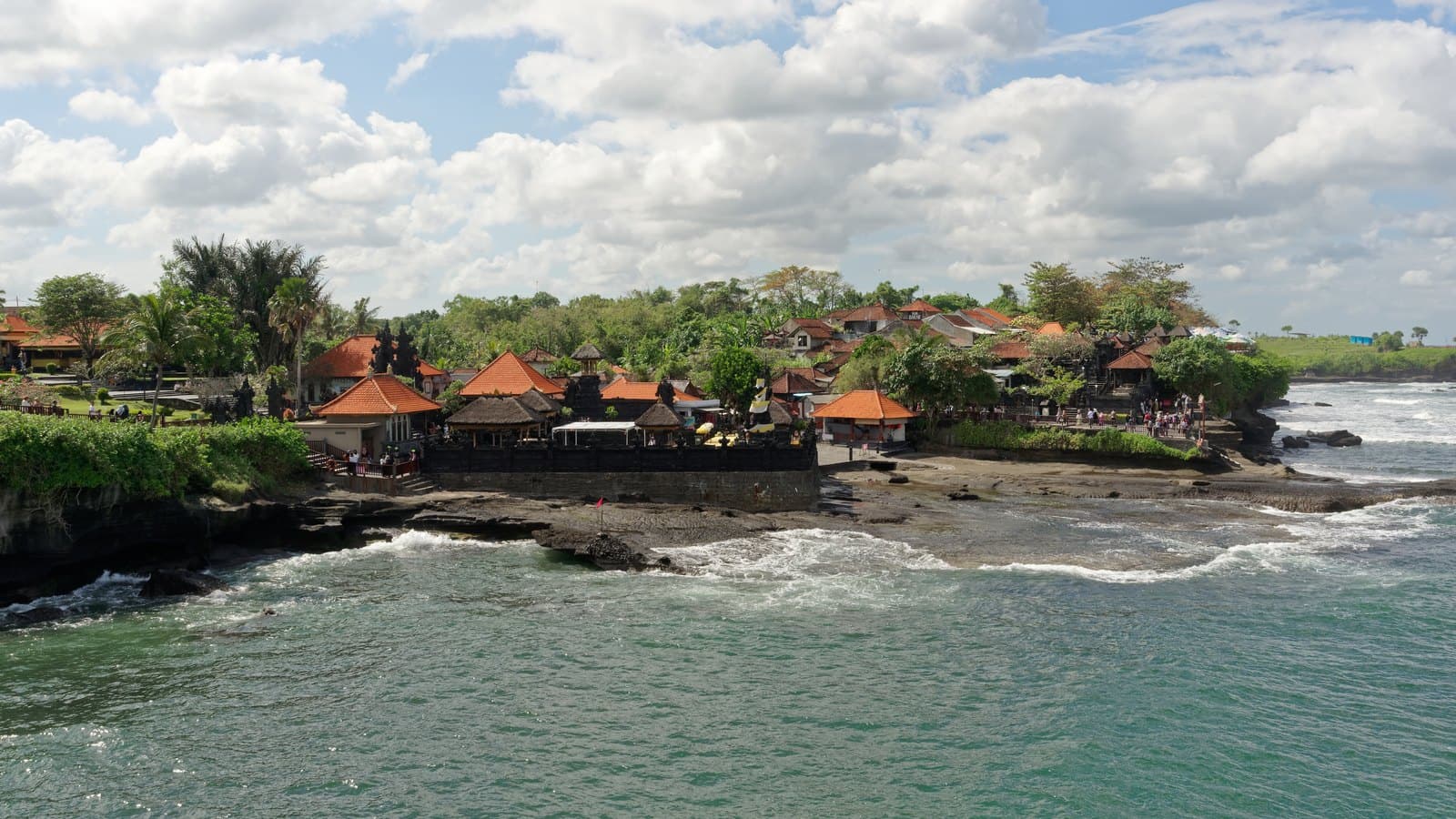
At low tide, the causeway to Tanah Lot is bare rock and wet sand, and you can walk out to the base of the temple. At high tide, the same causeway sits under water and the temple becomes a true island, cut off from everyone standing on the beach. Nothing else about a visit here matters as much as which one you get, and the light everyone comes for is only the second decision.
What the site is
Tanah Lot is a temple built on a wave-cut rock a short distance offshore, one of the sea temples that ring the island's coast as a kind of spiritual perimeter, each one facing the sea from its own promontory. It is also the most visited single site in Bali, photographed more than any other temple on the island, and both facts shape the same visit: a place of real religious weight that also runs, every evening, as a mass sunset attraction.
The tide question
The rock sits close enough to shore that at low tide you can cross on foot across the exposed shelf to stand at the temple's base. Come at high tide and the crossing disappears entirely, the water closing around the rock until the temple stands alone against the sky, which is its own kind of view and arguably the better photograph. Check the tide before the trip rather than the weather: it decides more of what you see than the sunset does.
What visitors actually get
The temple itself is not open to non-worshippers, and no visitor walks into its inner courtyard regardless of the tide. What the crossing buys is proximity: standing at the rock's base, looking up at the shrine, walking the clifftop path that frames the classic view through the arched rock of its smaller neighbour, Pura Batu Bolong, further along the shore. The temple is seen, not entered, and a visit here is built around that limit rather than against it.
The crowd, honestly
Sunset is the hour everyone comes for, and coach parties time entire days around it, which makes the last hour before dark the most crowded few hundred metres on the island: shoulder to shoulder along the clifftop rail, phones up, waiting for the same light. Arriving hours earlier gets the same rock under better, softer light and a site that is merely busy rather than solid with people. The sunset is real and worth seeing once; it is not the only way to see the temple.
The approach through the shops
Getting from the car park to the temple means walking a corridor of stalls selling sarongs, carvings and drinks, a commercial approach built up over decades of tourism that most visitors simply pass through rather than around. It is not hidden and it is not subtle, and treating it as part of the walk rather than an obstacle makes the whole approach easier.
The blessing at the spring
At the base of the rock, a freshwater spring rises beside the salt water around it, considered holy, and visitors can receive a blessing there: a priest touches holy water to the head and presses rice grains to the forehead, the same gesture used at temples across the island. It is offered, not compulsory, and it is one of the few moments in the visit that is participatory rather than purely visual.
Getting there and away
Tanah Lot sits north of Canggu on the Tabanan coast, close enough for a half day from the southern resorts, and the evening crush leaving after sunset is exactly the kind of jam the travel time matrix prices honestly rather than optimistically. The seasonal guide covers which months give the clearest skies for the light that draws the crowd in the first place.
The last visitors leave the clifftop rail as the shrine goes dark against a sky still orange at the edges, and the tide, already turning, starts closing the causeway behind them.