Activities · The Bukit and the south
The cliff beaches of Uluwatu and the Bukit
Padang Padang, Bingin, Thomas, Suluban and Dreamland all share the same access problem before they share anything else: a stairway cut into a cliff. The stairs decide the day more than the sand does.
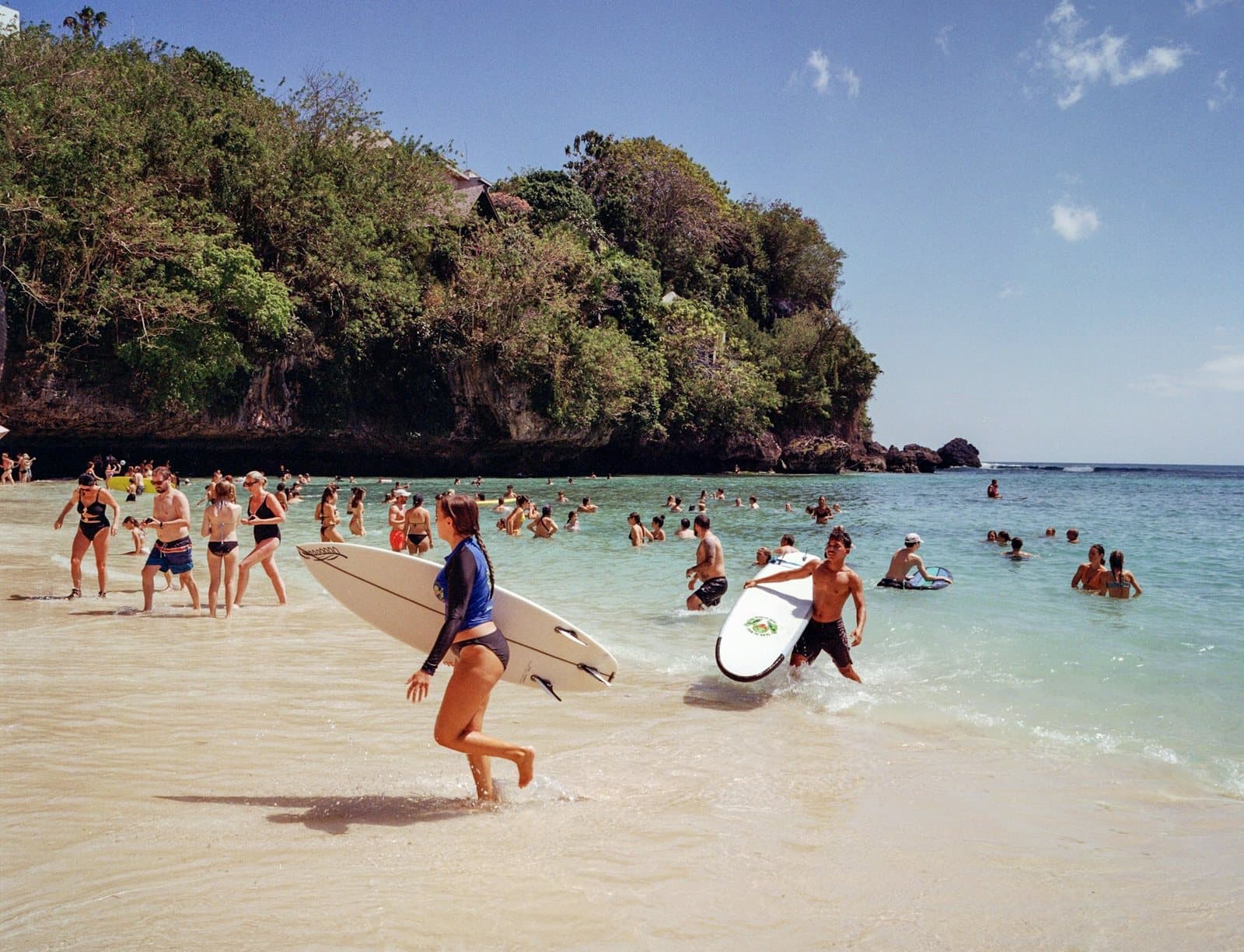
Every beach on the Bukit's western face is reached the same way, down a flight of stairs cut into limestone, and that fact matters more for planning than which cove you pick. There is no boardwalk here and no gentle slope to the water: you go down first and pay for it climbing back up in the heat, gear in hand, at the end of the day rather than the start of it.
The beaches, one line each
Padang Padang is small, framed by rock walls either side and famous for the reef break just off it, one of Bali's best-known waves for experienced surfers rather than beginners. Bingin is the sunset beach with the cliffside warungs stacked above it, a long paddle out to a fast, shallow reef break that rewards confidence over caution. Thomas is the quietest of the group, a longer, rougher stairway keeping the crowds thinner and the sand more open for families willing to make the walk. Suluban, known locally as Blue Point, is the cave beach: the stairway drops through a limestone cavern before opening onto the sand, and the surf break off it is one of the Bukit's most consistent. Dreamland, now signed as New Kuta Beach, is the widest and most developed stretch, sun loungers and beach clubs along a longer flatter run of sand than any of the others offer.
The tide question
Several of these coves are reef shelves as much as they are beaches, and the tide decides how much sand is actually there. At high water, Padang Padang and Suluban in particular narrow to a thin strip or disappear against the rock, and Suluban's cave passage floods enough that the walk through becomes impassable rather than merely damp. Checking a tide table before committing to the stairs down is not optional caution here; it is the difference between a beach day and a wasted climb.
The stairs are the fitness gate
None of these beaches are hard to reach in the sense of distance. They are hard to reach in the sense of vertical metres on uneven stone steps, several hundred at some of them, often without a rail for long stretches and slick when wet. Anyone with knee trouble, a stroller, or a lot of gear should treat the stairway itself as the day's main physical event, not an afterthought before the swimming. Going down is the easy half.
Surf beaches, not swimming pools
The water off every one of these coves sits over live reef, with rip currents that run stronger than the calm surface suggests, especially near the channels boats and surfers use to get out past the break. These are not the sheltered lagoon swimming of Sanur; treat them as surf beaches first and swimming spots second, respect the local surfers' right of way in the water, and ask at the stairway top before assuming a cove is safe for a non-swimmer.
The season
The dry season from roughly June to August brings the Bukit's most reliable swell and its clearest offshore wind, the window the July page documents in detail, and it is also when these beaches draw their biggest crowds of surfers and sunset watchers alike. The wet season halves the wave but empties the stairs. Pair a beach afternoon here with an evening at the Kecak performance or the temple at Uluwatu itself, since the drive up from the south is paid once either way.
The cliffs stay lit gold for a good twenty minutes after the sun drops behind the horizon, long enough to climb the stairs by that light rather than a torch.