Activities · The highlands and the volcanoes
Ulun Danu Beratan, the lake temple
The shrine everyone photographs stands on one islet, seen from one angle, and the lake's level decides whether it stands in water or on exposed grass. Also: it is cold and wet in the highlands when the coast is neither.
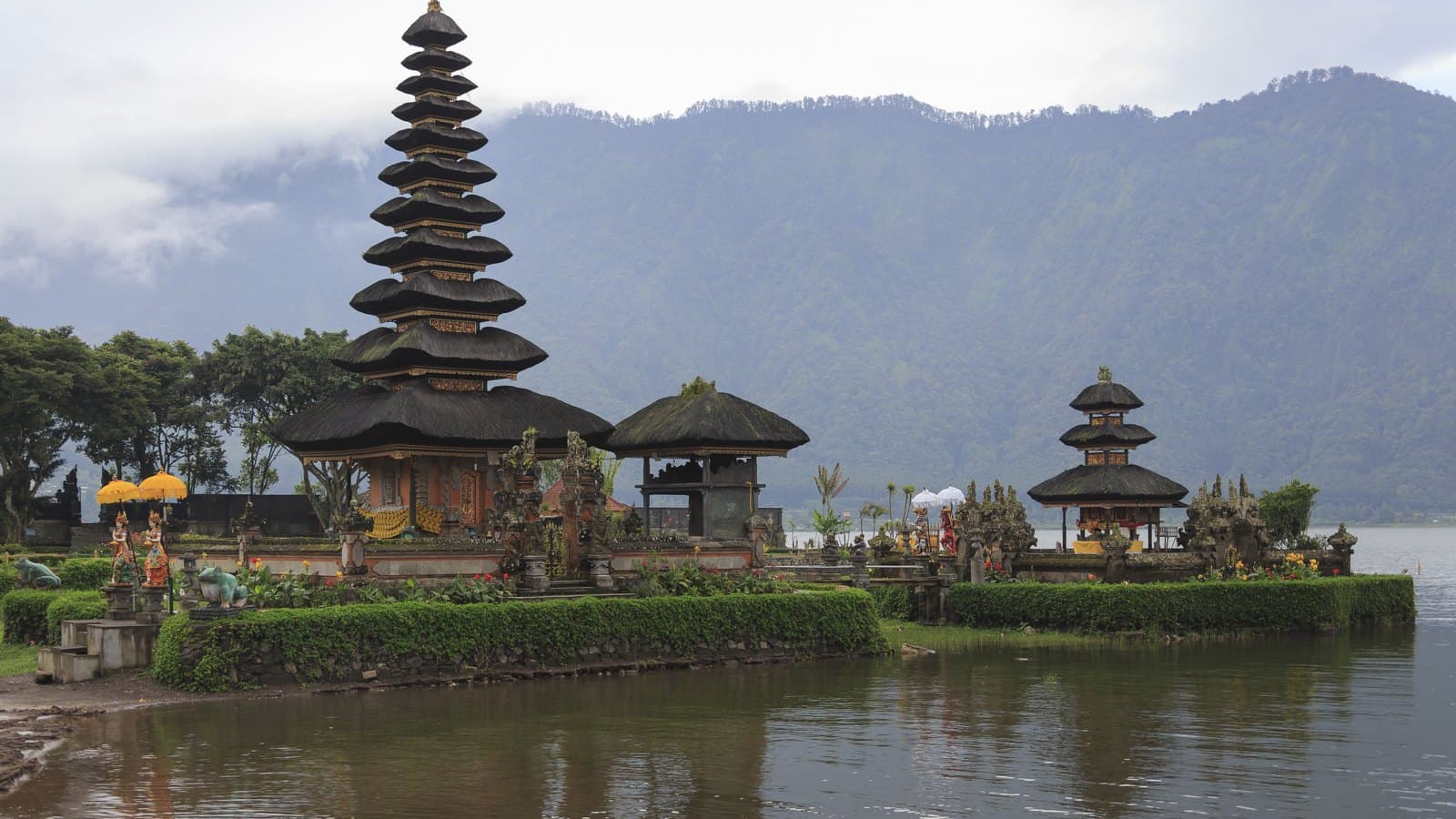
Every Bali brochure carries the same picture: a tiered shrine standing on still water, mountains rising behind it. The shrine is real and so is the lake, Beratan, but no caption mentions that the water's level decides whether the shrine stands in a lake or on exposed grass at the edge of one. The photograph everyone has seen was taken from one spot, at one angle, on a day when the lake obliged. Arrive on a different day and that photograph is simply not available to you.
The shrine, the water, and the angle that makes the photo
Pura Ulun Danu Beratan sits where the highland road meets the lake shore at Bedugul, its eleven-tiered meru built close to the water's edge, smaller shrines standing on the mainland beside it. The famous view, the meru appearing to float, comes from one fixed spot on the shore, looking across the narrow gap to the tallest tower. Step even a little either side of that spot and the illusion changes: less water, less floating, more temple standing where a temple usually stands, on solid ground.
Why the lake, not the architecture, is the point
Beratan is a crater lake, and the temple is dedicated to Dewi Danu, the goddess of the lake, because the water below it feeds rice terraces down the mountain through the subak system that has organised Balinese farming for centuries. The postcard shrine is the entrance to that idea, not the whole of it: this is a working water temple before it is a photograph, and the small boats crossing the lake belong to the same economy as the fields it irrigates.
Three shrines, one for each of the trinity
The lake's edge carries more than the one shrine everyone photographs. Two further meru stand nearby on the mainland, completing a set dedicated to the same Trimurti honoured across Balinese temples, Brahma, Vishnu and Shiva together rather than stacked one above the other the way most temple compounds build it. The famous islet tower belongs to Shiva; the other two are the ones every visitor walks past on the way to the photo, without knowing they are looking at two thirds of the same idea.
The coast is warm; up here it is not
Bedugul sits high enough in the central highlands that the climate breaks from the rest of the island: mornings arrive in mist, afternoons bring rain more often than the coast sees it, and evenings ask for a layer nobody packed for a beach holiday. Visitors who left the coast in shorts and sandals regularly regret it by the time they reach the car park. The drop in temperature is not subtle, and neither is the rain, which builds through the afternoon rather than clearing it.
Timing beats planning
Arrive at opening, before the coach parking fills and the crowd stacks three deep along the shore path at the good angle. Early is also when the mist still sits on the water and the light comes in low rather than flat overhead. The rain follows its own logic more than the calendar's: the seasonal guide tracks which months give the highlands their clearest mornings, but a wet afternoon can arrive in a dry month up here as easily as a clear one arrives in the wet.
Getting there from the south
Most visitors come up from the southern resorts as a half-day loop rather than a base, and the drive climbs the whole way: the coast gives way to rice terraces, then to clove and coffee gardens, then to the cooler air of the crater rim itself. The travel time matrix prices that climb honestly against the short distance the map suggests, since altitude and switchbacks slow a road that looks quick on paper.
Munduk shares the same cold, a short drive on
Munduk, further along the ridge, shares Bedugul's cold and its cloud, and the two pair naturally into one highland stay rather than a there-and-back afternoon. Around the temple itself, the Candikuning market and the botanical garden above it fill the hours a single photograph cannot.
What it costs
Entry is ticketed at the gate, with parking collected separately; the amounts move often enough that we publish none we cannot date. Budget for both, and carry small notes.
By mid morning the boatmen are out on the water anyway, ferrying whoever wants the lake from its own surface rather than the shore, indifferent to whether the crowd behind them finds the shrine floating this week, or standing, as it sometimes does, on grass.