Activities · The north and the west
The coral wall at Menjangan Island
Inside Bali's only national park, a coral wall kept in better condition than anything in the south by distance and protection at once. What the island is, what the reef offers snorkellers and divers, and why this is an overnight, not a day trip.
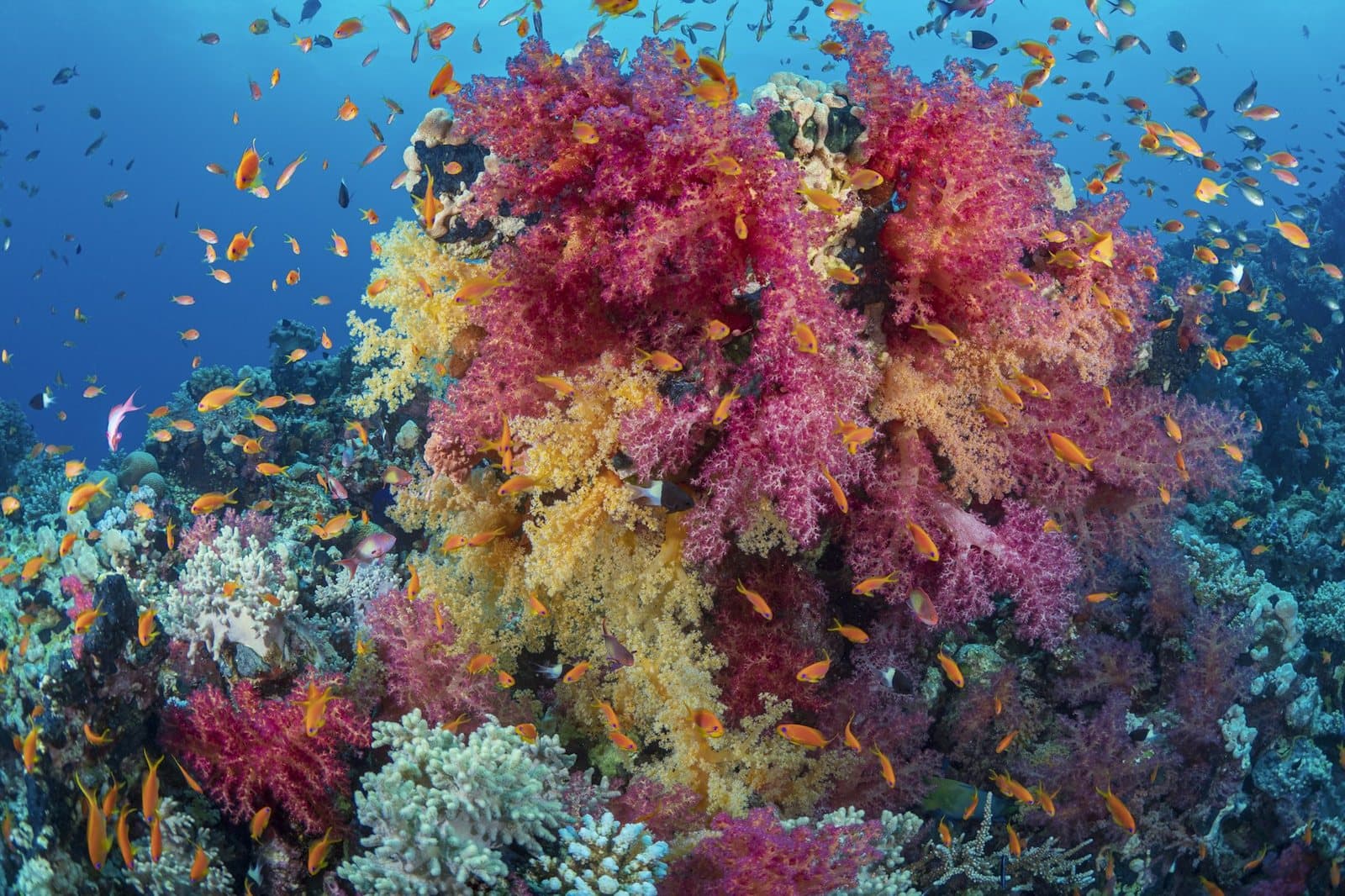
A ranger's outboard crosses flat water from Labuan Lalang jetty, and in that short crossing a snorkeller leaves the tourist economy behind almost entirely. No boats rafted three deep, no fin traffic jam over the coral, no queue at the entry point: just calm water, a boatman who works for the park rather than a resort desk, and an island with no address.
Bali's only national park
Menjangan sits inside West Bali National Park, Taman Nasional Bali Barat, the island's only national park and one of Indonesia's oldest protected areas. The park covers the far northwestern tip of Bali, forest, savanna and coastline managed as a single unit, and Menjangan is its best-known marine feature: a small island a short boat ride off the park's own coast, reachable only by arranged boat rather than by any road.
An island with no residents
Menjangan is uninhabited. Its name means deer, after the animals that once swam across the strait from the mainland to graze there, and the island today is dry forest and empty beach rather than any kind of settlement. There is nothing to buy on Menjangan itself; everything a visitor needs travels out with the boat.
Why the coral held up
The reef around Menjangan is widely reported as the best-preserved coral in Bali, and the reasons are structural rather than mysterious: the surrounding water sits inside a national park, with the protections that status carries, and the island is far enough from the south that the crowds and the anchor damage that have degraded reefs closer to the resorts never arrived in the same numbers. Distance did what regulation alone often cannot, by keeping the boat traffic thin.
The wall, and the shallow water above it
Menjangan's signature is a coral wall, a near-vertical drop starting close to shore and falling into deep water, thick with fan coral and reef fish along its face. Divers follow the wall down for the site's full scale; snorkellers get a genuine version of the same reef in the shallow water along the top of it, no certification required, close enough to shore that a strong swimmer covers real reef without a tank. It is the anti-Penida: the crowded boat traffic and the manta-spotting scrum further south are simply absent here.
The permit and the boat
Visiting means arranging a park entry permit and a boat at Labuan Lalang, the jetty on the mainland coast that serves as the gateway to the island; independent travellers can arrange both on arrival, and dive operators based nearby handle the paperwork as part of a trip. A cost attaches to both the permit and the boat hire; we publish none until we can date them from a source.
The honest logistics
Menjangan is not a day trip from the south, and pretending otherwise is the surest way to spoil it. The travel time matrix prices the drive plainly: the crossing to the far northwest eats most of a day on its own, before any time in the water. The trip works as an overnight staged from the north coast instead, based in Lovina or routed through the hill villages around Munduk, with Menjangan as an early departure the next morning rather than a bolt-on to a southern itinerary. Divers already planning the Liberty wreck at Tulamben on the east coast are looking at a different corner of the island entirely; Menjangan asks for its own trip, not an add-on to someone else's.
The wall keeps its coral because almost nobody comes to see it, which is the one fact that will not survive Menjangan becoming famous.